
Michael Harper Speaks with Jake Fournier
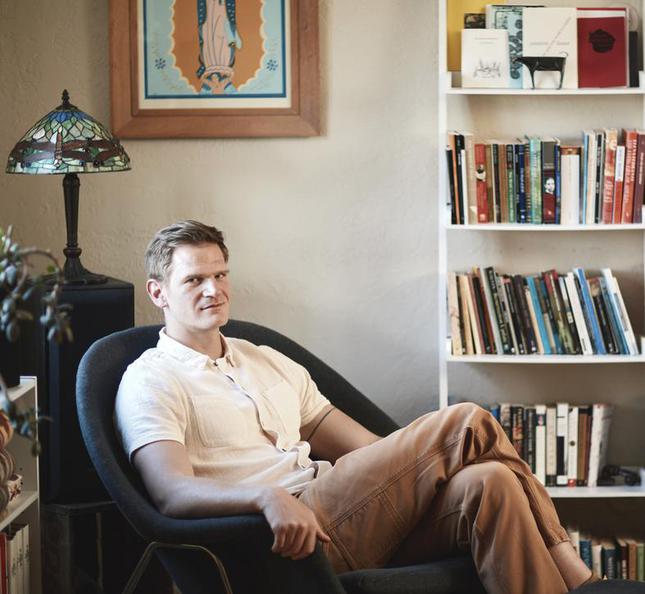
Jake Fournier is a poet and firefighter based in Albuquerque, New Mexico. He holds an MFA in poetry from the University of Iowa and a PhD from the University of Chicago, where he studied abolitionist poetics. His debut poetry collection, Punishment Bag, was recently published by the University of New Mexico Press.
MH: I’m always interested in process, specifically in what is found while making a book vs what is planned. Can you describe the process of creating this book? When did you see the overall structure and at what stage did it fall into place?
JF: I planned to write this book, my first book, without a plan. I realize that sounds silly, but it would probably have been easier to write and publish a book that was designed to land in the contemporary moment, that could be explained succinctly, or that explained itself in terms of some graspable structure or conceit. There's a lot of writing in this collection that tries to explain what other writing in the book is doing. This happens formally, in that certain poems build on techniques that previous poems borrowed and built, and it happens narratively in that eventually the poems take a retrospective and summary attitude toward themselves. One of the title poems could be classed as an ars poetica, and I see the notes, which are built mostly on biographical or memoiristic exegesis, as a poem. I see this as simultaneously a very childish—even puerile—but also extremely enchanting kind of structure: the dream within a dream within a dream.
MH: This collection has a slipperiness to it. The variations in form, especially dense lyrical poems transitioning to more narrative poems, created this excitement whenever I turned the page because I was unsure what to expect. Can you talk about the variety of forms in this collection and how they interact with each other?
JF: I wrote a poetry book before this called variously That Color Is Quiet Fire and Fournier Construction, and it explored similar, though more rigorous, formal variation. That book was full of sestinas, centos, pentameter, rhyme schemes—stuff like that. An early version of it was my MFA thesis. I discovered, as an aside, seven years ago that someone stole the circulating copy from the university library. I believe there's another copy that can only be read on site. I was very flattered by that, which I shouldn't have been because it almost certainly had to do with personal feeling outside or almost entirely unrelated to the poems, but of course I can't be sure.
I mention that book, or abortive attempt at a book, because I think the relationship to formal variety in it was very similar to ways I've heard neo-formalists like John Murillo talk about form, namely, as a kind of disciplinary schoolroom. The constraints, say, of iambic pentameter, teach the poet something about how to write with balance, equanimity, stateliness, grace. I don't know. I don't think this is an entirely wrongheaded approach, but I think these perceptions of form are largely enculturated. Few of those qualities are inherent to what iambic pentameter does "in and of itself," if that even makes sense to talk about. People love to biologize these things into a kind of human universality, especially when it comes to breath and the heartbeat, but I don't think these biological readings hold up. Why for instance should iambic meter mirror the heart and not trochaic? In other words, why should the filling of the atria precede the contraction of the ventricles when we map the meter onto the organ? These perceptions, I think, have much more to do with historical accretions surrounding form, which is not to say it isn't worthwhile to learn how to try to wield and employ or exploit these, essentially, prejudices that speakers and thinkers of English are likely to have. Language is a collective, historical, and, even in its limited case—gibberish—enculturated medium.
I did see form as a learning enterprise when I was writing that unpublished book, again, without a plan, and a shadow of that probably persists into this book, though the poems in this book, while formally and tonally various, are much looser. There's not really a poem, or there's only a very few poems, that couldn't accurately be termed free verse. It's a lot of different varieties of free verse and the way that I've been explaining the tension you describe between opacity and clarity in the few months since the book's release is as a relationship between poems, on the one hand, that exist as a surface experience—i.e. that largely subvert the potential for readerly participation in a sustained scene—poems, in other words, that try to use the materiality of language itself to confer an experience, and, on the other hand, poems that give some vista onto experience, that use the conventions of drama, like the soliloquy, or of narrative, like scene and dialogue, so that readers aren't constantly drawn to the surface of the language. I'm glad you experienced the push and pull as "exciting" and "slippery," and I think that's because I also felt that tension as exciting. There's a sawtooth, uneven structure to several poems in the book that I talk about stealing from Laurine Niedecker in the notes, and I tried to exploit that structure to give—myself, anyway—a feeling that those poems were slipping off the page, much like, I'm realizing, the placenta slipping off the delivery bed at the end of "Speedway Creamer."
MH: There isn’t a lot of certainty in this book. There are precise images, but I kept sensing these poems reaching for a place beyond language or between language to articulate something I felt but couldn’t always clearly name. This striving, for me, became the point of many of these poems. Do you agree with this description, and if so, can you talk about pushing language to these limits and what that does to the relationship with the reader?
JF: The description to me sounds a lot like the explanation I gave, through the metaphor of the classroom punishment bag game, in the narrative title poem, namely, that I was trying to reach beyond language to a set of vital or fundamental experiences that can only be poorly translated into words. Another poem says, "Living on rice and living on beans and rice, / I can reach into another life." Do I agree with that? No, I don't agree with it. Can it work as an explanation? That's a different question. I recognize that many readers want and seek out clarity and that they encounter this uncertainty, as you describe it, as obstinate, selfish, indulgent, even masturbatory. Who am I to tell them that they're wrong? Plenty of writing that does what we're describing is that way, and I get the life-is-short feeling when I run up against it. I have, now that the book exists, the freedom to not defend it. I would even see my own defense or case for it as the least reliable one. I hope eventually some reader comes along who likes the book despite or maybe even because of some of its uninvitingness, and that they develop an argument, which is a class of expression people hardly seem to respond to anymore, for why anyone should care.
MH: Many of the abstract poems resist clearly defined places or people, but there are also real, textured locations like Paris, the Southwest, and Erie, Pennsylvania. Can you talk about place in your poetry and what imprint these places left on this collection?
JF: Yes, I'd like to talk about this because I have felt sometimes that this triangle—these inconsistent settings—is a weakness in the collection. I'd modify Erie, Pennsylvania to include the whole of what I think of as the I-80/90 corridor from New York City to Iowa City. Why are these places in the book, except that these are the places I mostly happened to live when I wrote poems without a plan—largely, as I've said, even resisting any plan— for how they would come together? Is it that I can't or otherwise failed to universalize my experience or to concoct some kind of theory about how this received subject matter—how happening, as we all do, to live in certain places—should matter to people or make them think about how they live the way they do? What I can say is that that effort, the tendency to universalize experience, is something I've mostly encountered as a kind of falseness or, really, and I do think this is meaningfully different, as something that is untrue.
Nature, which was a grandiose and inconsistent category even at the outset of industrialism and the recession of wild—or, let's say, forested places—across the planet, means little to me, but I do think that, if a person wants to create things that are lasting, it is very smart to encounter and absorb as much non-human agency as possible. If you speak with angels, and they show up in your offices, then you probably don't even have to go outside. A yard, though, is a universe, and flies and mosquitoes still come into most people's rooms. All these things are full of plastic now, which is dumb to point out, or obvious—that the deer have terrifying illnesses—save that if your work doesn't somehow see it you're drawing a kind of stick figure. Don't get me wrong! I like stick figures, and when people draw eyes where you can see the entire iris or where houses across the street are upside down.
MH: Were there any writers or artists that you kept returning to during your time writing this? What was their influence on the collection?
JF: The earliest poem in the collection was written in 2011 and the most recent was written in the spring of 2025 after the manuscript was slated for publication. I didn't return to a whole lot during that time, some of the very big names, yes, but not systematically or in any organized way. Some writers had an outsized influence, or I've tended to imitate a few of them, but I think poorly in that, much as, cycling back to the answer above, I loved their distortions, they weren't my distortions. I think this is true for the New York School. There's a lightness and playfulness in their poems that my work rarely manages to capture. I'm very funny—who could trust someone who says that?—to the people who know me, and I think my humor is often extremely acerbic and mordant. Some people, I think almost entirely friends, can't get through one of my poems, especially a new one, without being brought to the point of tears laughing. A near stranger witnessed this once, and she said, "Your poems are very funny, but I don't think you think they are funny." Yikes. I think readers who don't know me, after they read the book, would be baffled to hear this, getting, at best, here and there, a light chuckle or something. So it's lamentably an inside humor.
More broadly, I think of this question as another version of the "What/who is your favorite X?" question. I've found this question, especially for the things I live in a daily relationship with like books and writing, laughably absurd. When I was still a dating person, people would ask me things, seriously, like, "What's your favorite color?" or "What's your favorite food?" I don't like to pick favorites and there's a few poets whose work I imitated and credited in the book—I won't say which ones—whose work I hate or find genuinely bad. I forced myself to write poems that used tricks I found reprehensible. Recently I've softened. There was a supervisor I had when I was working at the law library at the University of Chicago. I can only explain the particular way that she was mean to me as a bizarre kind of flirtation. I had a pair of mustard yellow/brown corduroy pants that I wore a lot back then, and, one day, she said, "Ha! I see what your favorite color is." I'm still the sort of person who wears the same or maybe two different pairs of pants every day for a year, and my response, internally, was something like, "Woah, whacko. Back off." Now, I think, you know, I guess that is my favorite color. It's a very particular tone of yellow that's hard to find. I wore those pants to shreds.
MH: Your time as a teacher in Paris is central to one of the titular pieces of this collection. Can you describe how teaching has influenced your poetry or how you think about poetry?
JF: I started out as a very bad teacher. My students found me uninspiring and pointlessly difficult, and part of it was that I was extremely self-conscious and uncomfortable in the role—a role, let's be clear, in which I wanted more than anything to excel. I did not want to work at it though, and I almost found that there was something shameful in the idea that I should have to work at it. I'm a genius; I shouldn't have to work at anything. I was also, I think it's relevant here, extremely young. It was like having a teenage boy with acne play King Lear. To succeed at that time, when I first taught standalone college classes at the age of 22 in the winter of 2012 with very little prior experience, would have taken an almost generational talent.
Lately, despite the influence of many great teachers who were not at all this way and even in the wake of visiting the classes, in association with my book, of a friend who is a phenomenal, beloved, both gentle and authoritative teacher, I have started to feel disturbed by the cultic structure of the classroom, and beyond the classroom, of poetry in general. Call it wizardry, mojo, power. I don't know. How do we influence people? And should we influence people to behave according to certain precepts, to see what we do in writing as good, or to promote and publish writing which our powers, in conjunction with but often also superseding the writing itself, imbue with significance?
I have tried to take a neutral stance, but there is no neutral stance. If I teach the Chronicle of the Narváez Expedition, for example, I could say, well, it's the first narrative by a person of European descent written concerning the land mass we now call the United States of America and that it catalogues, yes, an extremely biased, limited, and doctrinally inflected set of impressions concerning difference that we must think critically about—what is the thinking that we do, I would beg, that isn't critical?—and I could fall back on its priority, its being "first," whatever that means, as a kind of prop or crutch to bolster my rationale for teaching it, but that argument, that things with historical precedence should be given credence or weight, is not neutral!
Still, what do we make of the fact that this colonizer, this Spanish captain—Head of the Cow—at least in his own version of events, was sustained through a series of environments utterly hostile to hundreds of others who perished alongside him because he was encountered as a healer!? Like many, when he runs into irresolvable difficulty, he falls back on God, but the simple fact that we can read his narrative is proof that he survived, that he was sustained, and that his only explanation for it, which is no explanation at all, is that it was God's grace. He and his three companions blew on people's bellies—people who they at least believed would have killed them if not for this—and the people felt better. I hope this answers your question.
MH: The notes section at the end of the book contextualizes and muses on many of the poems in this collection. What prompted you to include this part of the book and how do you see it adding to the reading experience?
JF: The notes themselves explain this, and I mention it not out of irascibility, but because it can be fun to explain things many times. What the notes say is that, after I submitted the manuscript, an anonymous reviewer for UNMP required that notes be added as a condition for publication. In other words: no notes, no book. The book would not have been published or submitted for review in the first place if it weren't for personal and extraneous connections I made that again had nothing to do with an unbiased party's assessment of the merits in the work. Those are very easy explanations, but they are not good explanations, especially in the sense that they are not very entertaining, except maybe to the extent that an almost idiotic honesty is, if not very entertaining, a bit refreshing. What it seemed to me the reviewer wanted was a straightforward gloss or an answer key that would solve the riddle of the poems. This, I think most people would agree, is not what those notes provide.
I say it's fun to explain things many times, and that's because I like explaining things differently. I like that things can be explained differently. This is one thing that has gained a lot of salience for me because of AI, which many of my friends, for very good reasons, tell me I should not engage. The thinking that we project into LLM-generated text is very competent. This adjective, for a certain set of highly intelligent people I went to grad school with and that I'm relieved not to have to number myself among, was, for a while in the early 2010s, a sneering insult. The worst thing a poet could be, for them, was competent. What I'm about to describe may be a symptom of the limits of the bots' competence or it might be a result of the uniformity of their incompetence, but if you ask the bots to analyze a poem, they can do it from any angle. They will pull on the same material, will notice the same things, that a human reader would, and they will produce arguments in each case that are, to a fault, almost uniformly plausible. If you ask them to "re-read" a poem, they will produce complicit language, "Yes, on this reading, I noticed..." that stages a claim to have reanalyzed and reassessed, just as the training data (the human tendency represented in the writing it has processed) would indicate is appropriate. Their criticisms, unless they're specifically prompted otherwise, will almost always soften if they're asked to re-read, and that is also true for human readers too, especially when it comes to dense, nutritious works. The more you eat fresh vegetables the better you feel.
William Perry has a schema that a teacher put in front of me in a required pedagogy seminar. He lays out four broad stages of intellectual development: Dualism - knowledge is absolute, determined by outside authorities, and answers are right or wrong; Multiplicity - "everything is subjective"; Relativism - knowledge is contextual, evidence-based, and "relative to one's perspective"; and, finally, there's Commitment or Constructed Knowledge. Even in Perry's account, or the little bullet point reprisals I've seen of it, this final stage involves a bizarre infusion of spirit. How, given that our knowledge is relative and contingent and that many plausible cases can be made where the evidence conflicts, do we come to have conviction? On a societal level, superior evidence holds very little sway. Look, for instance, at what's happening with vaccines. Even on the utmost edge of science, one's commitment to a theory or a terrain or a line for pursuing and obtaining evidence let alone the interpretation of evidence involves a similar spiritual infusion. I don't know what else to call it. A behaviorist might say that our convictions derive entirely from the biases of our accrued experiences. Maybe that is the case, but I encounter many thinkers that dismiss their own beliefs if they catch even the slightest whiff that those beliefs stem from some advantaged position that could be attached to the accidents of their identity. They defer, instead, to outside authorities, which maybe we could describe as a reversion to dualism. I don't think that is necessarily a bad thing. It depends on the legitimacy of the authority.
AI, as it stands, doesn't lack evidence, it lacks conviction. Conviction must be built into it externally, and I do not trust the people imposing the conviction. Not at all. So the question I'm skating around is very simple, do I lack conviction? Am I a relativistic thinker? Am I suspended at a limited, agonizing stage of development? And, if I present you with a conviction, let's say about what one of my own poems means or about how the notes relate to the book, where does that conviction come from? Who and what is imposing it on me? One thing I hate is that the lack of commitment I'm espousing seems, on its surface at least, to relate to some foundational essays on poetic analysis, namely, those of the Fugitives, which is the name I prefer for the New Critics, because, first, it is the name they gave themselves and, second, I like the way it underscores their political quietism vis-à-vis identity and place—white boys in the Jim Crow South. Their simultaneous identification as and failure to identify with the historical fugitives that come, I think for most people, more readily to mind when we think of the region fascinates me. These, by the way, are essays I don't like! Ideas I'm sick of. I was asked once by a phenomenal teacher, Ken Warren, to give a précis of "The Intentional Fallacy" on the fly. He said my précis was wonderful. Now the more important question, this time for the entire class, did anyone believe it? In other words, did anyone believe that the intentions of an author should have no bearing on how we should understand or appreciate the works they produce. I said, I remember, "I think it's a valuable heuristic."
__________________________________________________________________________________________________________________________________________________________________________
__________________________________________________________________________________________________________________________________________________________________________
__________________________________________________________________________________________________________________________________________________________________________
April 28, 2026
Michael Harper teaches at Northern New Mexico College. He received his MFA from the University of Idaho. His most recent work has appeared or is forthcoming in Ninth Letter, X-R-A-Y, Hobart, Bat City Review, Terrain.org, The Los Angeles Review, and others.
__________________________________________________________________________________________________________________________________________________________________________
Listen to Fournier read "Underpass," from his new book Punishment Bag
__________________________________________________________________________________________________________________________________________________________________________
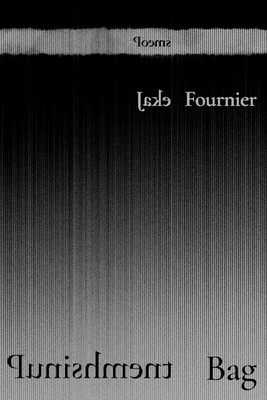
Punishment Bag by Jake Fournier, 96 pages UNM Press, 2026
Listen to Fournier read "Cold Mountain," from his new book Punishment Bag
Listen to Fournier read "M.," from his new book Punishment Bag
__________________________________________________________________________________________________________________________________________________________________________
