by Britt Bustos
May 12, 2026
This Elegance by Derrick Austin; BOA Editions; 85 pages; $19.00.
In Derrick Austin’s third collection, This Elegance, he sets out to show that beauty exists within the conditions that make life difficult, not outside of them, and succeeds by grounding his lyric poems in ordinary scenes, using accumulation and juxtaposition to hold pleasure and pressure in the same frame. Writing into a world shaped by racial violence, queer precarity, pandemic disorientation, and the ongoing pressures of labor and spiritual uncertainty, Austin locates beauty not apart from these conditions but within them. Early in the collection, the speaker of “The Age of Pleasure” defines elegance as “concentrated sensibility for pleasure despite terror,” a formulation that clarifies the project the poems undertake. Throughout the collection, moments of shared meals, remembered conversations, and encounters with art are rendered with a devotional attentiveness that transform ordinary life into something luminous without separating it from the realities that threaten it.
One of the primary ways Austin accomplishes this is through a pastoral attention to ordinary life, grounding beauty in everyday scenes, and does so effectively through the accumulation of sensory detail. In its quietest moments, the collection renders the world with the attentiveness of a painter working in natural light, allowing the ordinary to become radiant without separating it from lived experience. In “Sunday Tea,” the speaker and his neighbor, the only two Black gay men in their building, sit together over cups spiked with whiskey “for the heart,” trading opinions on Baldwin, recipes for chicken paprikash, and the names of friends now gone. The poem earns its elegance through this accumulation and the warm specificity of house music pulsing and friends on the dance floor described as “worldly and glamorous as a Venetian painting.” By linking a Sunday afternoon ritual to the grandeur of Renaissance art, Austin does not simply elevate the ordinary but reveals its inherent richness, demonstrating how beauty can emerge from within shared, everyday experience. This strategy is particularly effective because it allows the collection to locate elegance within the conditions of lived life rather than outside of them, reinforcing the book’s central claim that beauty and difficulty are inseparable.
“Ash and Dust” carries this pastoral attention into a more ominous terrain, demonstrating how Austin uses juxtaposition to harbor beauty and danger within the same frame. The poem places the speaker on a black sand beach with a red sky beaming overhead, where mollusks and urchins move through tide pools while ash from wildfires miles away settles on windshields. A hermit crab, “grave and playful as the Yahwist” announces, “Man, you’re dust,” collapsing the vitality of the natural world into a reminder of mortality. Rather than resolving this tension, Austin allows these opposing forces – new life and environmental destruction – to coexist, asking the reader to inhabit their proximity. This same attention carries into “Dairy,” where a remembered bus ride accumulates details like scrapple crackling in grease, a grandmother clipping coupons by an ashtray, and children’s songs begun and not finished before arriving at the quiet admission that the speaker “wake[s] with a sense / I’m living a false life or one hemmed in.” By placing this moment of disorientation at the end of an otherwise tender act of remembering, Austin again refuses to separate beauty from unease. This juxtaposition is particularly effective because it makes the pressure under which these moments of attention operate visible, making the emotional weight of these scenes feel earned rather than imposed.
If the pastoral poems establish Austin’s attention to the ordinary, the ekphrastic and homage pieces extend that attention by showing how art itself becomes a way of thinking through lived experience, and this is where the collection’s formal range becomes especially effective. Throughout the collection, poems dedicated to or modeled on other artists such as filmmaker Kathleen Collins, sculptor Richmond Barthé, and drag performer Cherry Jubilee borrow the structures and sensibilities of their subjects, allowing Austin to engage their work from within rather than at a distance. In “Writing about Paintings,” he offers a concise statement of this approach: “Near to holiness / is the bliss of seeing how others thought / through the questions of their age with line and color.” This framing positions ekphrasis as an act of kinship, one that places Austin in conversation with artists who used their forms to grapple with the pressures of their own historical moments. That same logic shapes “Homage to Kathleen Collins,” a fragmented sequence of meditations that mirrors the elliptical, essayistic quality of Collins’s filmmaking. Similarly, “Grande Dame” pays tribute to the drag artist in the form of a classical ode: formally measured, genuinely reverent, and insisting that the performance of a woman lip-synching Phyllis Hyman while clearly wasted, wig askew and earrings on the floor, is nothing less than an encounter with the Holy Ghost. Austin’s angle of queer futurism here, indebted to theorist José Esteban Muñoz, lives clearly within this collection through his insistence that drag, house music, and the quiet loyalty of two men sharing Sunday tea are not lesser versions of beauty but instead beauty’s most durable and irreplaceable forms. By allowing form to echo content, Austin makes these poems feel lived-in rather than observational, and this strategy works because it situates artistic creation as another space where meaning is made under pressure rather than outside of it.
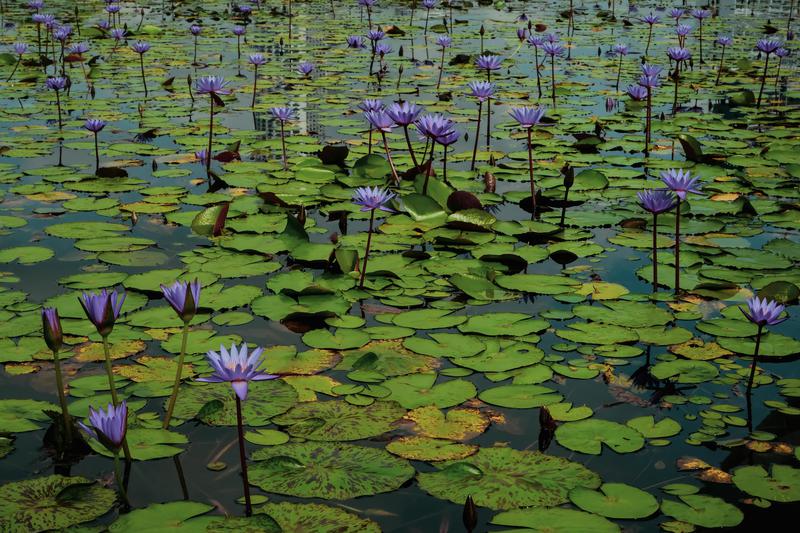
“Shoshanah,” Austin’s meditation on water lilies named seven times in the Bible’s Song of Songs, offers the collection its quietest summary. The flower is described as “common as the blues / as the mud it roots in, / amorous blossom, prophet’s bowl,” an image that holds beauty and materiality in the same frame. By locating the lily in mud rather than lifting it out of it, Austin refuses any version of elegance that depends on distance from the conditions that sustain it. Instead, the poem circles back to Austin’s thesis on beauty as something that emerges from within the very ground of difficulty rather than apart from it. “Shoshanah” distills the logic that attention, carried out with enough care and patience, can render even the most ordinary and burdened spaces into sites of meaning. Common as the blues, common as the mud: this is precisely where Austin paints his elegance on the page within the ordinary and the overlooked, tended with such fierce and patient care that by the end of the collection, the reader cannot imagine beauty living anywhere else other than the floating rock we share our art, lives, labor, and hearts with.
Throughout This Elegance, Austin demonstrates that beauty exists within the conditions that make life difficult, not outside of them. Across poems that move through intimacy, memory, art, and labor, Austin treats attention as a way of staying present inside those conditions rather than escaping them. The collection moves from marshes and tide pools to community zoos and drag bars, from prayer to exhaustion to the small rituals that sustain daily life, and gives each of these spaces equal weight. Through this, Austin defines elegance as a way of seeing that remains grounded in the world as it is: shaped by pressure, marked by uncertainty, and still capable of being rendered into art through care and attention.
__________________________________________________________________________________________________________________________________________________________________________
__________________________________________________________________________________________________________________________________________________________________________
__________________________________________________________________________________________________________________________________________________________________________
“Common as the Blues”: Queer Futurity and Pastoral Optimism in Derrick Austin’s This Elegance
POETRY REVIEW

Image by Justineliza from Pexels
Britt Bustos (she/they) is a poet, editor, writer, educator, and musician taking up space in Houston, TX. Their works appear or are forthcoming in new words {press}, Heavy Feather Review, table//FEAST Literary Magazine, The WAC Clearinghouse, McNeese Review, Atticus Review, and elsewhere. She serves as an associate poetry editor for West Trade Review and is associate editor of The Texas Review. They received their MFA and MA from Sam Houston State University, where they currently teach English and Creative Writing. Find them @brittbustos.
__________________________________________________________________________________________________________________________________________________________________________
© 2025 Iron Oak Editions
__________________________________________________________________________________________________________________________________________________________________________
© 2026 Iron Oak Editions




Stay Connected to Our Literary Community. Subscribe to Our Substack Roots & Words