by Corrine Watson
June 9, 2026
Earth 7 by Deb Olin Unferth; Graywolf Press; 248 pages; $24.
In Earth 7, Deb Olin Unferth explores the tension between control and chaos, illustrating the ways survival is a delicate balance between preservation and adaptation. Although the story takes place on a dying planet, Unferth avoids the survivalist tropes and dramatic spectacle associated with dystopian fiction. Instead, the novel takes a quieter tone that moves with the flow of the apocalypse as an ongoing ecological process. Through fragmented storytelling and the strained relationship between mother and daughter, Unferth presents a critique on rigid preservation and creates space for adaptation and imperfection.
The story begins in an underwater pod community on a sea shelf, where Rosemary, a renowned but reclusive researcher, attempts to preserve life through collections of DNA samples and digitalized human consciousness. Unferth mirrors Rosemary’s obsession with sterile, controlled preservation through her cold, emotionally detached prose as she often treats her daughter like a specimen under observation. For years, Rosemary only refers to her daughter as “the child,” which is a stylistic choice that reinforces her unwillingness to engage with people, or her work, with much emotional complexity. As the perspective begins to shift to Rosemary’s daughter, Dylan, Unferth is able to challenge the rigidity of Rosemary’s worldview. Unferth presents this transition and argument with nuance that works well as it shapes the argument of the novel, capturing how life is designed to adapt and grow even in the most inhospitable environments. As Dylan begins to grow, Rosemary observes that she “was no longer a floor child” and muses about how the changes in Dylan’s perspective as she grows from child to teenager alters the way she engages with her environment because she “would never see the floor in the same way again,” and in the same way, humans will never see the world the same way again as they prepare their lives for a future off world. This leads her to the conclusion that as time passes, “The world vanishes piece by piece… either because it is too much in view or not enough.” This reflection on impermanence and human development allows Unferth to successfully reframe the apocalypse as less of an ending than as a new beginning as she captures the limitations of preserving life in stasis.
Unlike her mother, Dylan craves not only Earth in all of its grounding messiness, but human connection. Rosemary’s preference for isolation and emotional distance pushes Dylan to seek belonging elsewhere, yet even after leaving the pod for a desert-based research facility, she still struggles to find community. When Dylan meets Melanie at an artificial beach resort, Unferth incorporates a bit of humor that feels a bit out of place given the emotional coldness of both Rosemary and Dylan up until this point. But Unferth is able to pull off the shift as she creates an awkward rom-com-style meet-cute where both women fear they’re falling in love with a robot as years of isolation have left Dylan emotionally stunted, while Melanie’s experimental cosmetic procedures have artificially preserved her appearance. This absurdity allows Unferth to explore the innate humanness of imperfection. As Dylan’s research begins to embrace adaptation in conjunction with preservation, the novel’s overall argument begins to take shape. Dylan realizes that “Her mother’s mistake had been to fight the flow of Earth, not move with it." Unlike other narratives in the ecological disaster genre, Unferth pushes back on the need to save the planet and imagines survival as a willingness to step aside and submit to the unpredictable evolution of a new world.
Unferth also captures the passage of time with a brilliance that emphasises both its arbitrariness and infinite cycles of beginnings, and endings. In the pod, Rosemary notes that “Human time began to lose meaning. Numbers became artificial, names theatrical, stillness a fiction.” As she drifts further into isolation and the natural planetary indicators of time, Rosemary’s understanding of time becomes more abstract. Yet Dylan becomes her reminder that change is inevitable. Unferth extends this idea into the novel’s structure, as the story moves like shifting sand. Characters drift in and out of the narrative in a way that feels like we’re still grasping to hold onto them as they slip away just as they’re beginning to take shape. This creates a sense of instability that feels a bit unsatisfying for a reader who prefers character driven narratives. But Unferth is still able to create emotionally dynamic characters with nuanced brevity that further highlights the sense of impermanence in Earth 7 but resonates with a hope that suggests that even in an infinite cosmos, the brief lives and experiences can hold meaning.
By the end of the novel, Unferth redefines the idea of survival, transforming an apocalyptic narrative into one that looks toward an uncertain future with hope and curiosity. Even on a dying planet, people still find love and meaning in the fleeting experience of being alive. The novel ultimately distinguishes itself as a unique work of literary fiction through Unferth’s willingness to embrace a delicate balance of structure and chaos that holds space for instability rather than trying to resolve it.
__________________________________________________________________________________________________________________________________________________________________________
__________________________________________________________________________________________________________________________________________________________________________
__________________________________________________________________________________________________________________________________________________________________________
"The World Vanishes Piece by Piece": Preservation and Adaptation in Deb Olin Unferth's Earth 7
FICTION REVIEW

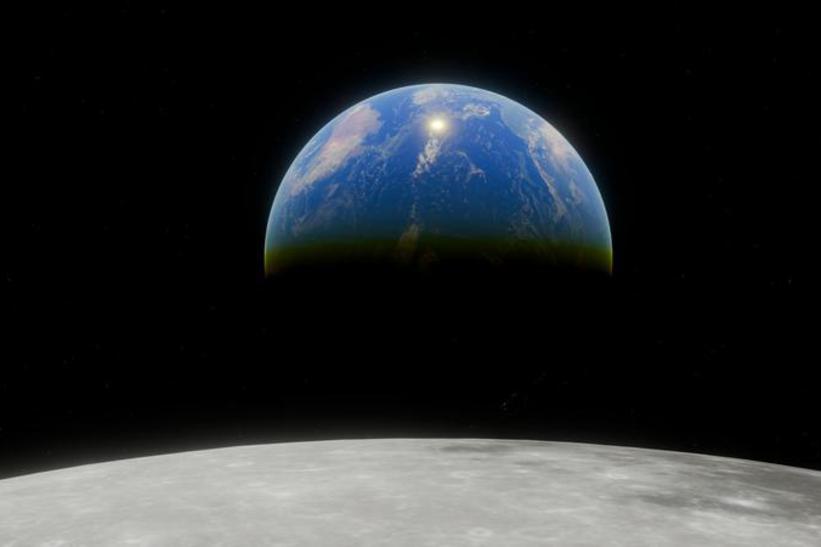
Image by Zelch Csaba from Pexels
Corrine Watson is a freelance writer and editor based in Charlotte, NC. Her work has appeared in Wretched Creations and the Southern Review of Books. Follow her on X @CorrineWatson6.
__________________________________________________________________________________________________________________________________________________________________________
© 2025 Iron Oak Editions
__________________________________________________________________________________________________________________________________________________________________________
© 2026 Iron Oak Literary




Stay Connected to Our Literary Community. Subscribe to Our Substack Roots & Words