by Filiz Turhan
June 2, 2026
Without Terminus: untraining and archive by chaun webster; Graywolf Press; 224 pages; $17.99
chaun webster’s Without Terminus, untraining an archive is many ambitious things. It is an archive-based memoir, a prose poem in action, a lyrical essay, and a graphic tour de force populated with visual poetics, manipulated photos, and typographical innovations. With every page, webster first builds, then dismantles and rearranges his words, approaching and reapproaching the topic of structural anti-Black violence in the context of his own family history. In the book’s final pages, webster aptly characterizes it as a “cross-stitched book,” one that is “generative in the negation.”
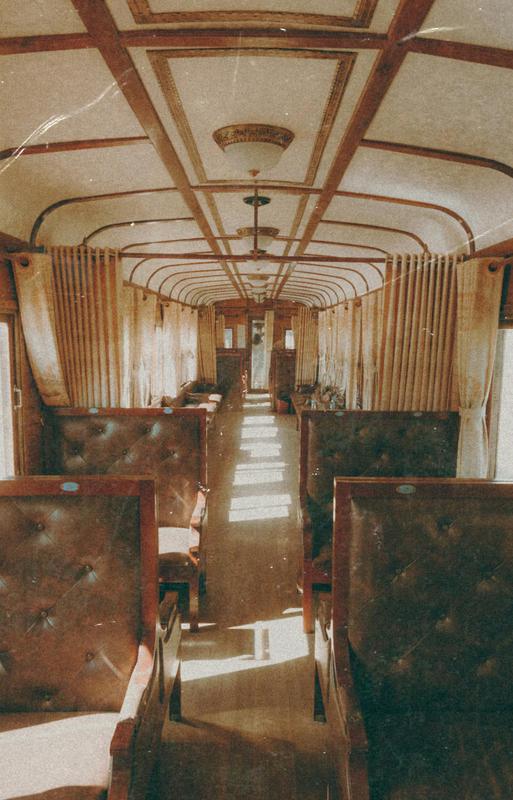
webster’s primary focus is on his maternal grandfather, Reginald, who was employed as a Pullman porter. With just a few salient facts about Reginald, webster fuels a sustained exploration of Black labor: after working for twenty-five years, Reginald retired with a gift of a pen, but no pension. He died not long thereafter. The paradox at the heart of his working life that most interests (and literally haunts) webster is that Reginald was denied rest, even as his function was to ensure the repose of passengers on the train. It is the intersection of notions of “comportment and compartment” that drives much of the book’s engagement with family lore, the lives of other key Black historical figures such as Harriet Jacobs, and with the praxis of archival research.
The book’s key features are seeded in its first section: on the left facing page is a sparse family tree, on the right begins eleven brief passages commencing with a lower-case letter: “your grandfather worked.” In the passages that follow, webster swiftly and effectively tells Reginald’s story; quotes from James Baldwin; reflects on the Black Pentecostal church; notes his use of the archive to recover knowledge of his ancestor Hannah (ca. 1800); and quotes from a contemporary writer, Renee Gladman . Each of these elements is rendered in the voice of a lyrical poet writing in prose. The section culminates with an 11th entry, redolent of oddly spaced word groups, and ending with a comma rather than a period. These layered innovations effectively orient the reader to webster’s greater project throughout the book.
A key feature of the book are five “Dream Sequences.” I don't know if these sequences are meant to serve as section headers, but they do seem to create structure. Each dream sequence is framed by a common four-page format, the chief feature of which is the same picture of Reginald, printed lighter each time, accompanied on the facing page by a short lyric reflection on Reginald’s life. Often the writings that populate the pages between these dream sequences feature other members of webster’s family. His own mother is both a presence and an absence, as he indicates that while she is the source of some of his information on Reginald, they are not currently on speaking terms. In one of the most poignant passages of the book, webster addresses his great grandmother, Alice, in a letter format, exploring and imagining her life as the wife and mother of men “taken by the train.” webster goes even further back, addressing his ancestor Hannah, whose name, a palindrome, is an occasion for recursive reflection. Finally, in a gripping section, webster recounts a brief incident on a train with his own child in which he forgot to swipe his metro card, resulting in a tense exchange with an officer scolding him, “hand on holster.” This narrative expands to also explore the death of a young writer, Henry Dumas on a train in 1968. Each vignette is accompanied by visual poetics, photo montage, and cut-ups that add harmonic resonances to the narrative.
In Dream Sequence #5, Reginald’s picture is so light that its image is barely discernable; in the ensuing pages, webster writes a single ten-page paragraph, a letter to himself wherein he appears to repudiate the entire enterprise of researching, writing, and perhaps, attempting a kind of resurrection of his maternal grandfather. If so, and nevertheless, webster’s writing leaps to its apex in the flow and exploratory possibilities of language. It’s a prose poem, a manifesto and even an ars poetica. The final two pages of the book work together both visually and linguistically: on the left side page webster expresses his desire to “rewrite all our names…” while the right facing page features the very same words printed so many times that they are only legible on the periphery. Thus, the book closes with an invitation, perhaps a demand, to keep writing, even as it appears to cancel the request. It is not an erasure though; the repetition functions more like a broken record, i.e. an enactment of the notion that the archival record itself is broken, or as he terms it here at the close, the “terminal wreckage of the archive.”
The reader of Without Terminus will be well rewarded by spending time with this book for its lyrical passages, its inventive use of graphics, and its engagement with the discourse surrounding archives, which is especially fraught in the landscape of black American history. Indeed, even webster’s choice of narrative perspective engages the reader on multiple levels: the “You” of the family tree on page one is the same second person “you” which webster has chosen to employ throughout the book. In the final pages, webster reflects on this narrative choice: “maybe this is why you have been writing against the i….attempting to make the other you, the reader who has confused this former you for themselves, unstable. you, dear reader are not safe here either.” In the hands of a lesser writer, the use of the second person “you” could redound to the maudlin, but in the capable hands of webster, one finds a poetics that is simultaneously challenging, alienating, and in spite of it all, a bridge.
__________________________________________________________________________________________________________________________________________________________________________
__________________________________________________________________________________________________________________________________________________________________________
__________________________________________________________________________________________________________________________________________________________________________
"Beyond the Archive of Loss": Family, Race, and Negation in chaun webster's Without Terminus, untraining an archive
NONFICTION REVIEW

Image by Min An from Pexels
Filiz Turhan holds a PhD in English Literature from New York University, and she is a professor of English at SUNY Suffolk. Her creative work has appeared in The Sonora Review, The Threepenny Review, The North American Review, and elsewhere. She also serves as an associate prose editor for West Trade Review.
__________________________________________________________________________________________________________________________________________________________________________
© 2025 Iron Oak Editions
__________________________________________________________________________________________________________________________________________________________________________
© 2026 Iron Oak Editions




Stay Connected to Our Literary Community. Subscribe to Our Substack Roots & Words