
Miriam Åkervall and Michael Harper Speak with TR Brady
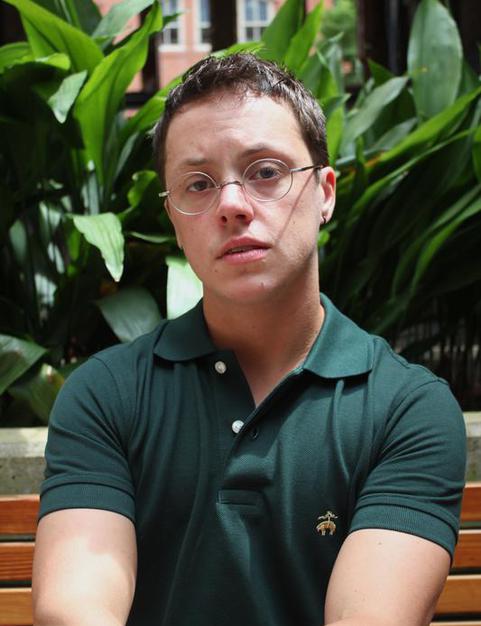
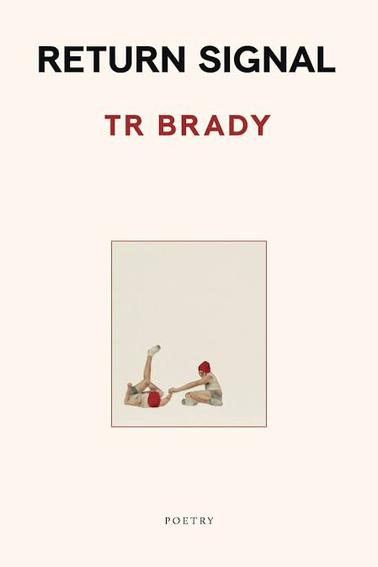
TR Brady is the author of Return Signal (Fonograf Editions, 2026). His work has appeared in Tin House, Bennington Review, New England Review, and elsewhere. TR received his MFA from the Iowa Writers' Workshop. He is the co-editor of Afternoon Visitor and lives and teaches in Alabama.
MA & MH: Can you explain how this collection came together?
TRB: I do think that I'm frequently oriented more toward the individual poem rather than the project. I'm going to (mis)remember something at you that (I think) I saw Carl Phillips talk about several years ago when he was judging for the Yale Younger, about individual poems in a collection needing to stand on their own, and I understood that at the time very literally. I feel that Return Signal (at least for me) is a collection that, while there are sequences and narratives of transition and queerness and grief, addresses the sledgehammer of early adulthood. The first person you made out with in a movie theater–dead. Struggling in grad school. Your first major break up. Deciding to transition after years of daydreaming about it and losing most of your family in the process. Moving across the country twice. Mood stabilizers and anti-depressants. Your father, also dead.
Because I was writing individual poems about all of these things, I had to really make a decision, on a craft level and a personal level, about when I was going to transition to another project. And that was hard. Grief doesn't disappear, but its appearance changes. Transition is perpetual. What made the poems in Return Signal is, in this way, still very every day for me but less or differently so now.
MA & MH: Return Signal has a series of sequential runs: "Testosterone Daydream," titles separated by a slash, the “Phantom:” pieces, and of course the epistolary poems scattered throughout—How do you think about keeping sequences intact and spreading or weaving them throughout a collection? Were there other iterations of the book where these stayed more sequential?
TRB: When Return Signal was picked up in May of 2023, I actually created a spreadsheet (data!) tracking how much the manuscript had changed in the few years I'd been sending it out to answer this question for myself. Of course, I was trying to notice what poems I'd retired from the first iteration of the book to what was eventually picked up, but I was also trying to see how the structure changed over time. The final version that I was sending out was actually the first version of the book where I'd broken up the sequences and scattered them throughout the book. Each previous iteration of the book had sections in some fashion where the sequences ran together, so all of the phantoms in a row, testosterone daydream after daydream.
I took a submission cycle off and didn't send the book out for a little over a year when I first moved to Idaho and started a new project. When I went back to Return Signal, which even had a different title then, I tried to go back to the drawing board–as much as I could at least since I felt that I was pretty much done writing that book–and looked for ways to play with the narrative.
And I don't really consider myself a poet too much concerned with narrative, but I began to feel like the previous versions, where poems that share the same or similar titles stayed more sequential, were too pressurized when they appeared together, which didn't suit what the poems wanted to do or be. Daydreams and phantoms float, so I had to find a way to make that happen.
MA & MH: Doubling, twins, mirrors, and second-selves appear throughout this collection. These appearances allow different selves to coexist at the same time in the book. How do you think of character and other fiction techniques as a way to push narrative and access different emotions? Can you discuss how you see repetition and doubling functioning in the collection as a whole?
TRB: I'm a chronic re-watcher of shows. You don't want to know how many times I've seen The L Word. I bring this up because, as a queer person who grew up before the age of Heartstopper and Chappell Roan, I tried to find myself in anything I could. The butch checkout clerk at Walmart, Rachel Maddow, that one trans guy character played by a cis actress who was killed off of Degrassi, Hilary Swank as Brandon Teena, the older butches on my high school soccer team. I wanted so badly to be taught who I was and these stand-ins in the book are proxies for, maybe not a specific person, but for the search.
I think, similarly to the reason I write in 'sequences,' or at least recycle titles, is that I really just can't let things go. I'm a concise poet and a long-winded person. What I mean by this, is through repetition and doubling I'm trying again and again to touch something that I'm not sure I really can.
MA & MH: There is a way of reading this collection as a series of elegies about grief and mourning for others as well as other versions of self. There is also an epistolary quality to some of the pieces, such as “Brittany,” and “Daybreak,.” How does this form relate to grief or allow access to mourning?
TRB: This is a great question. "Brittany" is actually the oldest poem in the collection. I wrote it in September 2017. It was originally published under the title "Field Dream" in Pinwheel and I didn't change the title until my last pass through of edits last winter. Even though the title wasn't "Brittany" for most of the iterations of the book, I still understood it as an epistolary poem to myself. Brittany was my first girlfriend, and we dated when I was a sophomore and she was a junior in high school in 2009. She died in 2017 and I had this dream about her before her funeral. I'd call her death my first big death, so it formed most of the poems I wrote in grad school between 2017-2019. "Daybreak," is also older–I wrote it in 2018. When I was writing these poems, I was constantly returning to Stay, Illusion by Lucie Brock-Broido–and I was also re-reading Hamlet, from which Stay, Illusion is borrowed–Horatio to the ghost. Relating to grief and mourning? I too find company in talking to ghosts.
MA & MH: Neither “return” nor “signal” appear in the collection, but the title emotionally frames many of the themes. How did you decide on Return Signal?
TRB: It is so hard to title a book of poetry that takes you 6 years to write. I didn't land on Return Signal until after I made the final structural changes to the book in 2023. I won't list every previous title, but the first was 'field' and once it was "reimage"--neither of which I like very much now. I think that I didn't want the title to appear in any of the poems or titles because of the pressure that that puts on a single poem. I suppose that's also why I decided to break up the sequences. In a book that holds grief and transition, I couldn't devote one of those subjects solely to being the title of the book. I didn't exactly pull words out of a hat, but I did make a list of words that I felt could speak to what I was trying to do and said a bunch of them out loud in phrases of two until I got to Return Signal. I don't remember what the other words were.
MA & MH: There is such an incredible variety of punctuation in this collection that seems thematically grouped. The mid-line caesuras and open brackets stand out in particular as being in conversation with one another. Can you talk about pauses, narrative fragments, and how punctuation fits into your poetic toolbox?
TRB: I love this question! I'm not much of a grammarian. I'm also not much of a self-editor. Because of this, as I'm writing a poem, standardization doesn't factor in. I think that while these poems function in conversation with each other, this book was written more individual poem over project. Caesuras, at least here, how I use them, are cuts in the line, but more than cut as to stop or remove, cut as to signal new growth. A path has been closed, another way must be found. In that way, I feel that they allow for me to expand the line past it's natural end and work in excess in a manner that enjambment doesn't always afford.
MA & MH: You are also a fiber artist who works with a variety of materials. How does your work with physical materials like textiles and fibers inform the way you think about the materials of a collection or a poem?
This is a great follow up to the punctuation question. As a fiber artist, I primarily work hand-sewing paper. What this looks like: me with a giant, artist's clipboard, a folded hand towel, a piece of heavy paper, and an awl. Punching thousands of tiny holes, which I then sew with a needle and embroidery floss, to create landscapes mostly. As I'm punching the tiny holes, I do find myself moving very linearly, left to right across the page. I'm not sure if this is because I used to swim, but I find when I'm punching the lines out with the awl, I hold my breath as I punch. When I'm writing, I find myself taking a big breath between each line.
__________________________________________________________________________________________________________________________________________________________________________
__________________________________________________________________________________________________________________________________________________________________________
__________________________________________________________________________________________________________________________________________________________________________

November 3, 2026
Miriam Åkervall is a poet and translator. Their poetry appears in Colorado Review, Black Warrior Review, The Greensboro Review, and elsewhere. Their translation of Astrakanerna (The Garden of the Dead) by Marie Lundquist won an Honorable Mention in the 2024 Nadia Christensen Translation Prize and is forthcoming with Ugly Duckling Presse. Miriam’s writing was honored by an Academy of American Poets University Prize, and nominations for Best New Poets, Best Literary Translations, and an AWP Intro Award. Their work has received support from the Vermont Studio Center, The American Scandinavian Foundation, and the American Literary Translators Association. They live in Moscow, Idaho, where they serve as the 2025-2027 Moscow Poet Laureate.
Michael Harper teaches at Northern New Mexico College and is an editor at West Trade Review. He received his MFA from the University of Idaho. His most recent work has appeared in Ninth Letter, X-R-A-Y, Hobart, Bat City Review, Terrain.org, The Los Angeles Review, and others.
__________________________________________________________________________________________________________________________________________________________________________
Listen to Brady read "Phantom Mirror"




Stay Connected to Our Literary Community. Subscribe to Our Substack Roots & Words





© 2026 Iron Oak Literary
