Emile Estrada
The Cat’s Urn
The cat was dead. Its little head stuck out from under the bed. The young man had told his mother he’d get home before her. It was Thanksgiving and they were out of town visiting family. He volunteered to go back a day earlier and make sure the cat had food and water. Truth was, he wanted time to himself.
He set his bag down in his old bedroom. The cat usually sat on the backrest of the couch and stared out the window. It wasn’t there. The cat hadn’t come meowing at the door the way it always did. The litterbox did not smell, the bowls still with food and water left in them. His mother had been gone for three days. Not any longer than usual, but long enough for him to know she’d blame herself. The thing was old, fat, probably diabetic, and left alone for a couple of days. If anything, it shouldn’t have lived that long.
He broke the news with tact. He lingered on the first few words, but she knew right away. He wasn’t done talking before his mother’s wailing came through the phone, the kind only old mothers are capable of. He imagined her on her knees, arms stretched out at each side, speaking upwards at the ceiling of whatever room she was in, as if bargaining with the god of dead cats. Take me instead she howled. He listened and said nothing. This went on for a while.
They had come from some faraway place, it made no difference which, and they never stayed anywhere for long. It was only the two of them, and along the way, they found the cat.
He sat on the bed and stroked the thing gently behind the ears. The wailing stopped but he could not understand his mother’s words through her heaving. I have to go back home she cried. There’s no point in doing so. He offered to take care of the thing. She wanted to know how. He’d bury it in the garden, he said.
The green trash can was empty. The thing had been dead for some time. It would have been smart to just throw it away. He loved the thing. It was his mother’s, but really, it was his. He was content with throwing it away. It was dead. It was that simple, but the lie would take work. He’d have to fake the burial, to keep up the lie for who knew how long. He knew she’d make a little altar outside, burn candles when it wasn’t raining. This would go on for a while. He’d slip at some point and mention the trash in passing. More wailing. Guilt. Whatever else.
The next-door neighbor did not have a shovel. He did not want to go to the next house to ask for one. A fruitless endeavor. He had already moved away. It wouldn’t be long before his mother moved away, too. A cat buried in a yard with nobody to put flowers on its little grave.
They left their home nearly two decades ago. The whole family did. Many lost track of each other. Nobody knows where everybody went. Peripatetics never stay in one place for long. His grandparents are buried in a capital city somewhere in some country. No flowers by the tombstones in who knows how long, no one to wipe moss and dirt off the engraved names.
There are many graves nobody visits anymore. Over two-thirds of immigrants go unidentified after death. Most of them are cremated. Some are buried in graves nobody knows exist. No one is from anywhere.
Wrapping the dead thing in a towel was no easy task. Its legs were stiff, pointed outward. No towel was large enough to wrap around it. His uncle is a mortician. He embalms bodies. Once when he was young, he went to see his uncle work. He dressed a poor man in a cheap blue suit, sewed his eyes shut, stapled his mouth and wired his jaw. Pumped him full of fluids. They ate lunch next to the cadaver. Death is good business his uncle once told him.
Stupid fat man, the uncle shouted at the cadaver. Wouldn’t fit in his coffin. The uncle put his hand on the dead man’s collarbone and held his full weight over him. Snap. The next shoulder wouldn’t give so easily, so he used a hammer. Arms pulled from their sockets and folded underneath the cadaver.
The young man grabbed the cat’s legs and attempted to break them in half. They wouldn’t give. They were too stiff. Perhaps he wasn’t stiff enough. He could have tried harder. He sat on the bed and pet the dead thing a while. Three towels it took to wrap the dead thing.
The 24-hour vet is the only place open on Thanksgiving night. He walked in with the thing in his arms. Its paws stuck out from under the towels. The lobby was filled with people. Surprising how many dogs have access to chocolate. He filled out the form. It asked for the street address and the cat’s name. Morgan he wrote on the form, a white cat in a brown home. The form also asked about any allergies to food? To medication? Any special diet? Vaccination history? Temperament? They always want to know if the cat is friendly. Was friendly. It’s fucking dead he shouted What does it matter? A man in a dark blue uniform walked him back to the car. The cat lay on the passenger seat, its legs stuck into the air.
He went back in after several cigarettes and apologized to the lady behind the front desk. There are packages for cat disposal. For $100, they cremate the cat on a conveyor belt with other dead pets or roadkill. The ashes mix together and are discarded. For $150, they’ll engrave a paw on ceramic and send the cat’s ashes, plus whatever other ash mixes in, to your address. For $250, they’ll cremate your pet in a special, small oven by itself, no other ashes will mix with it. They’ll also write a eulogy and print a portrait of your pet if you provide a photograph.
Would you like a moment to say goodbye? the lady asked. It’s already dead. Nothing to say to something that isn’t there anymore, really. She took the thing from him and disappeared through double doors that led nowhere.
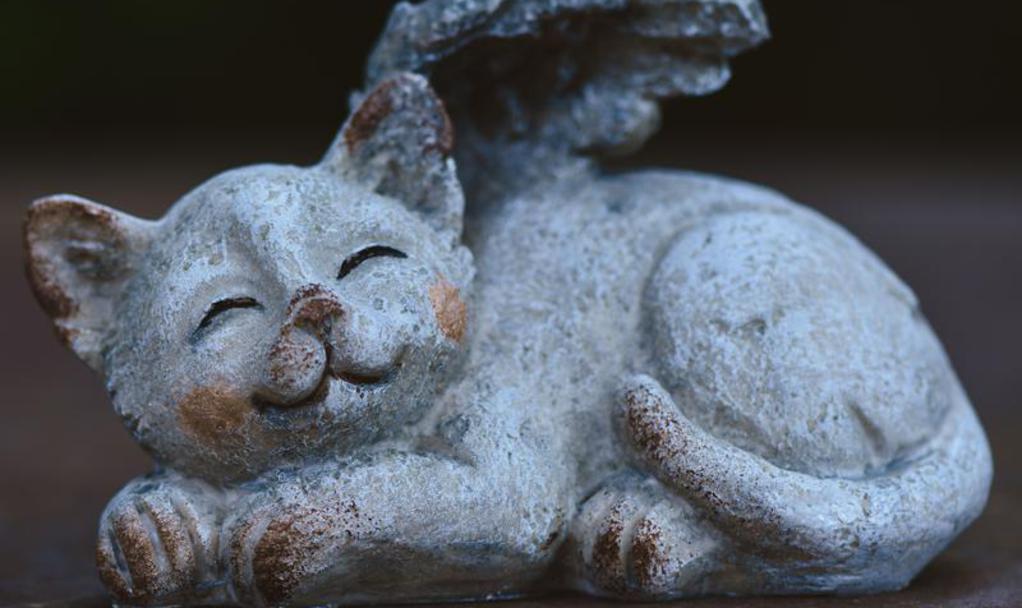
Weeks later, the young man’s mother called him. She told him over the phone that a little urn arrived in the mail. She opened the package and described it as she did. With it came a small ceramic tile with a paw print indent, the name Morgan engraved above the paw. A dead cat to pack in a cardboard box from now on each time they move. An altar was erected in the house on a corner table where the mother leaves cans of cat food and candles arranged around it, the urn a centerpiece of a permanent furniture fixture. More wailing from the mother. He held the phone at a distance, and her voice suspended high in the air. She was old, he thought. She’ll be dead soon. She’ll be buried where she dies. So will he, one day. No one will know where. Another untended grave.
__________________________________________________________________________________________________________________________________________________________________________
__________________________________________________________________________________________________________________________________________________________________________
__________________________________________________________________________________________________________________________________________________________________________
Image by Alexas Fotos from Pexels
__________________________________________________________________________________________________________________________________________________________________________

__________________________________________________________________________________________________________________________________________________________________________
© 2026 Iron Oak Literary




Stay Connected to Our Literary Community. Subscribe to Our Substack Roots & Words





Emile Estrada grew up in Venezuela and moved to the US in the mid 2000s. His work has previously appeared on The Good Life Review and Thin Air Magazine. English is his second language, and he currently holds an MFA from Northern Arizona University. He's currently working on his first novel.
Listen: