Elizabeth Wenger
__________________________________________________________________________________________________________________________________________________________________________
__________________________________________________________________________________________________________________________________________________________________________
__________________________________________________________________________________________________________________________________________________________________________
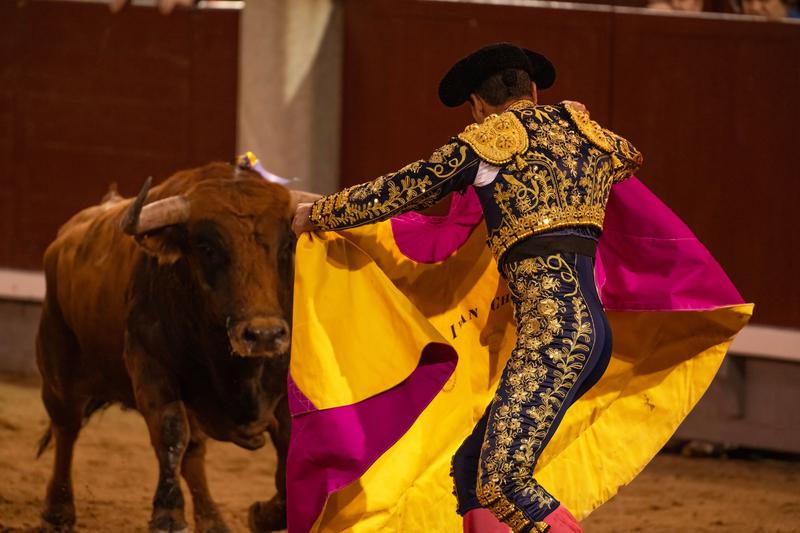
Image by Miguel Cuenca from Pexels
Elizabeth J. Wenger is a queer writer from Tulsa, Oklahoma. Her works have been nominated for the Pushcart Prize and Best of the Net Anthology. She is the winner of the Baltimore Review Winter Prize in flash nonfiction and was shortlisted for the Breakwater Review Fiction Prize. Her essay collection was selected as a finalist for the Black Lawrence Press Hudson Prose Prize. Wenger earned her MFA at Iowa State University’s program for Creative Writing and Environment. Her website is wengerwrites.com
__________________________________________________________________________________________________________________________________________________________________________

__________________________________________________________________________________________________________________________________________________________________________
© 2026 Iron Oak Literary




Stay Connected to Our Literary Community. Subscribe to Our Substack Roots & Words





Fighting the Bull
“In Hemingway’s life and works of the 1920s and 1930s, the preoccupation with the cruelty associated with animal killings was always secondary to his more important concern with representing his violent passions, particularly hunting and bullfighting, as expressions of beauty and virility.”
—from “Performing Manhood through Animal Killings: Revisions of Hunting as a Performance of Masculinity in Ernest Hemingway’s Late Writings” by Josep M. Armengol
The first class I ever took in college was taught by a fantastic, gay lecturer who smelled like the cigarettes he smoked outside the humanities building, ignoring the updated university rules which forbade tobacco on campus. He’d been smoking on the grounds for years, finishing cigarette after cigarette while his students shuffled in from shine or snow to learn about Shakespeare and Modernism. He wore a single earring, and he hated when you wrote towards instead of toward. He expected good work because he did good work. He was a man who breathed pure literature, sucking it down as easily as those pre- and post-class cigarettes.
The course was called “Americans in Paris,” and we read about and from Benjamin Franklin, Nathaniel Hawthorne, Mark Twain, James Baldwin, and The Lost Generation. This last formed the meat of the class: Gertrude Stein’s salon, Sylvia Beach and Shakespeare and Company, F. Scott Fitzgerald, and of course, Ernest Hemingway.
In that classroom in Lawrence, Kansas, these figures seemed utterly foreign and impossible to me. My college town was a quirky but small liberal bubble, surrounded on all sides by wheat fields and conservatism. My professor himself was an oddity, this flamboyant man in a state most known for its flatness. But both his queerness and the way he spoke of bigger places and bigger ideas left me dreamy as only an eighteen-year-old could be.
And what was I dreaming of: being an American abroad—if not in Paris, then elsewhere—writing my own missives and novels and essays and imagining with the hope of any aspiring artist that my work might be good enough to one day earn me a spot in an anthology taught to the next generation of striving young people.
When my professor taught, evoking the wide rues, and coffee shops that never ceased topping your mug, and the artists of Montmartre—that word my lips could never wrap well around—there would grow in my mind a spectre of Hemingway haunting those streets and our classroom, a symbol of American everything-ness. Hemingway with his four wives and strong jaw, with those forearms thick and painted with strokes of dark hair. Hemingway with his drinking and his hunting and fishing. He seemed so out of reach and yet so close.
Hemingway had spent time in Kansas City, not far from where we were reading his books and studying his legacy. There, he worked for the Kansas City Star and developed that signature, telegraphic style, sparse and direct, yet always suggesting something above and beyond the simple verbiage and diction. That near-empty language, stripped of all clear emotionality but which somehow created space for serious feeling in the gaps between the words, seemed simultaneously hollow and dense with meaning I couldn’t parse.
I’d first read Hemingway’s The Sun Also Rises in high school, and resented, as a Jew myself, the representation of Cohn, a sniveling, chip-on-the-shoulder boy striving for real manhood, but failing. There he was in the pages: Cohn, a middleweight boxer, punching his way out of his “feeling of inferiority” about being a Jew. How could I not take offense?
And then there is the issue of women in Hemingway, like Brett in The Sun, who was only a step more complex than the average manic-pixie-dream-girl. Hemingway’s women and weak men whose tasks were to serve as foils to the manly, traumatized, veteran protagonists could not help but offend my modern, feminist sensibilities.
This is, to be fair, an ungenerous summary of Hemingway’s works, but it is also based on the core truth of what it meant to read Hemingway as the young woman I was and am.
Rereading The Sun again in college alongside In Our Time, A Farewell To Arms, and his memoir, A Moveable Feast, I still didn’t warm to Hemingway. And yet, guided by that lecturer through the magic of 1920s Paris, there was something about Hemingway that changed for me. Something in his male characters, and in his voice in the memoir, in the courageous detachment, in the sense of the world as something full of danger and excitement, in the way women turned to him and violence defined him, the way writing acted as such a solid force in his life — all of it made Hemingway something of an unlikely hero to me.
This no doubt had something to do with my queerness and masculine presentation. In those early days of young-adulthood, I searched for what a life could be like for someone like me. I could find no easily accessible example of female masculinity in the literary canon. (Stein, for whatever reason didn’t appeal to me; the lecturer joked that she had “only been kept alive by grad student dissertations.”) I searched for more obvious representations of masculinity in male writers. And who was a more obvious example to cling to than Hem and his bulls?
I did not then see that there were paths I could forge on my own, and that attempting to follow in the footsteps of a straight man scarred from The Great War who had been born in a different century would lead me, a queer woman of the 21st century, nowhere I wanted or needed to be. His own path had not led to a happy end for Hemingway himself.
It was, in part, Hemingway and his writing that led me to travel. In college, I had studied Russian, not Spanish. But in the months following my graduation, I enrolled in a Spanish evening course at a community college. I studied in the downtime between the few odd jobs I worked to collect money and stories. Soon I had enough Spanish and cash to embark on a two-month trip to Spain. I went in hopes that I would see things there and be altered in ways I couldn’t predict, but which would no doubt supply me with that thing writers called “material.”
I still didn’t understand that material was nothing but ore you could mine from the world and hold raw in your fist. A starting point, but a thing that was useless without the smelting and smithing and bending and tempering and shaping. You could drown in material, but if you did not know how to use it properly, it became only something you’d aimlessly gathered once, something you had witnessed, but the purpose of which became more vague with time. As a young writer—and I am still a young writer—the only direction I had was to gather experiences and I did so with a hunger that left me exhausted, full to the point of purging, and with only notebooks of scattered and undeveloped ideas to show for it all.
Hemingway had described Spain as “the country that [he] loved more than any other except [his] own.” I’d been drawn there by an imagined, romantic vision and by scenes of matadors dancing horn and sword with muscled beasts that Hemingway had described. I wanted those beasts to move me as they had moved Hemingway. I did not know how else to begin.
There was something essential for Hemingway about violence—something about it that was also vitally essential to masculinity and to art. As he wrote in Death In the Afternoon, his tome on bullfighting customs and history: “I was trying to learn to write, commencing with the simplest things, and one of the simplest things of all and the most fundamental is violent death.”
The lecturer in that first college course did not assign Death In The Afternoon, but I’d already had a taste of Hemingway’s bulls from The Sun, in which he wrote that “Nobody ever lives their life all the way up except bullfighters.” And I wanted to live my life. I wanted to live it All-The-Way-Up.
To Hemingway, the courting of death, or more specifically, the courting of injury by bull—the gore and risk of it—made life more vibrant. The bulls and the horses in the ring called to that man who had himself seen so much injury as an ambulance driver in WWI.
So, in Spain when my friend said she was going to see a bullfight, I gladly went with her and a few of our other friends. We rode a bus on a dusty road to a small villa where a festival was being held. We watched the running of the bulls; I stood by a gated road while they ran by, huge things of heat and hide, stirring up the wind in their wake. I imagined Hemingway beside me, stoic as ever, nodding and taking notes, whispering advice to me: “The main thing is to know what to leave out.”
We saw bulls released in the ring and watched as a few people—all men—jumped in and got the bulls’ attention. Then as the bulls charged at them, the men darted across the dirt, jumping out of the ring just in time to avoid injury. And my friend turned to me, and we agreed that there were no women in the ring and would not likely be. It was because, we decided, women knew fear as a constant, quiet thing, and we would not pursue it if we did not have to.
Still, I wanted to see what and how Hemingway had seen, to be transported by modern visions that might act as portals into the mind of that long-passed man. If I could understand what he meant by it all, what the waving of capes did to him, how bravery was written and if it could really exist on some level beyond show or if the whole fight was, in part, just a performance — then maybe I could graduate to some new level of being. I wanted to know how to ascertain courage and greatness in the small movements of feet. I wanted to become what he had been by repeating what he had done, because if I succeeded I thought that it would for a while put off that laborious task of finding out what I was.
In the villa, we drank and had tapas while we awaited the fights. But in our haste to try everything—the calamares fritas, rich delicate slices of jamon, the solomillo a la castellana, the various croquetas and tortillas served in the tiny, dark bars that lined the central plaza—we missed our chance to buy a ticket.
The seats for the bullfight were filled quickly and with finality. We sought scalpers but even they were out of stock. And so we circled the ring trying to peer between the gaps of the fence posts and asking our six-foot-tall, Dutch friend to jump and peek over and tell us what she saw. We could hear commotion in the crowd as an announcer explained what was happening next. The fight was beginning, and we were missing out. It was the one thing I’d told myself I needed to see in Spain, and it didn’t seem I would get to see it.
On my next lap around the ring as I searched for a hole to see through a man motioned for me—why, I did not and will not know, perhaps it was that look of out-of-placeness on my face, and that aura of desperation. He could maybe see in me some trace of fear. It was a fear I was not fully aware of in myself: a fear that if I did not see a bull die that day, I would not become a writer.
The man pointed to a little hole that had been dug under a gate which allowed someone, if they got low, a view of what was happening in the ring. “You can see there,” he said, then made a motion for me to lie down in the dirt and stick my head through this unlikely window. And so I did.
The timing was such that in the moment I looked through that small space, what I saw was the last seconds of the bullfight. The matador plunged his estoque into the bull’s back. I watched the bull go down. And it was not a pretty thing. It was fast. Somehow the motion was swift, and yet the death itself occurred in slow motion. The bull bent on the ground before its killer. And I knew then that death is both a momentary thing and a thing that goes on and on forever.
When it was done, I stood up from where I lay on the ground. I brushed the dirt off my jeans, and walked away to find my friends. I did not know how to describe what I saw but went with them to a few more bars. Eventually it was time to return to our town and we went to the station and awaited our bus. We leaned on each others’ shoulders, tipsy from a day of sun-baking and shot-taking.
I had wanted to know if Hemingway saw himself as the bull or the bullfighter. The thing killing or the thing killed. He said that the whole fight was an art, and perhaps I missed the art in seeing only the death and not the torture.
I was tired with drink and full of all the things I’d seen and did not know what to do with. I closed my eyes and saw the play of the matador again in my mind. I can see it now, all those dreadful things that happened in the ring. Things that were not for me, but for a man I had wanted to be. I was not him. I would not be Hemingway, or a bull, or a bullfighter, but I did have the sacred opportunity we all are given in life, but which we often forget to take: I could work to become myself, whoever that may be.
Listen: