
by Alec Witthohn
April 28, 2026
Canícula/Dog Days by William Archila (translated by Mario Zetino); Red Hen Press, 203 pages, $19.95
William Archila’s first two collections The Art of Exile (Bilingual Review Press, 2009) and The Gravedigger’s Archaeology (Red Hen Press, 2015), each, in their own way, translate the U.S. immigrant experience through a kaleidoscope of jazz riffs, blues, poets, painters, and mythology. Both books are monuments commemorating what is both lost and gained, remembered and transformed in conflicts like the Salvadoran Civil War. They are also a testament to Archila’s prowess as a strong and freshly minted voice among the greats of Latine Poetry. His newest publication, Canícula/Dog Days, combines selected poems from both collections into a new bilingual introduction for both Spanish and English readers alike.
 In Canícula, Archila not only crosses spatial and temporal borders between the El Salvador of his youth and the United States of his later years, but reaches across metaphysical boundaries by working through others to communicate his experience of exile. In “Whitman,” the titular poet reveals himself to our speaker through “the woman in rags,” the “farmer picking grapes,” “the immigrant reciting lines on the bus. . .” They, too, contain multitudes, the personal becoming universal. A few poems later, Archila writes to Federico García Lorca as one might a friend, saying, “I want to stay here, standing in front of you, / exchanging the dirt in our pockets, / songs we carry from our countries . . .” Lorca, himself a victim of the Spanish Civil War, helps Archila carry the memory of his homeland, the hurt and the loss. By speaking to his readers by proxy, Archila invites us to relate with, not only his experiences, but the experiences of those like him.
He speaks, the same way that Pablo Neruda speaks to the ten-year-old poet over the airwaves, directing him to write “‘los versos mas tristes . . .’” in the poem “Radio.” In that poem and others, Archila delivers glimpses of the intimate moments in his life: his mother goes to bed alone listening to Neruda, he and his friend Henry dream of America after shifts at a restaurant in El Salvador, and we catch glimpses of Archila and his wife during their evening rituals in L.A. years after the war. In these poems the personal is political. “Guayaberas,” for instance, traces the poet’s memory of those pleated, four-pocket shirts worn by men like his father, hung out on clothes lines by their wives, children pressed against the nicely pressed creases running down their chests, until “everyone—shakers or maracas, cutters / of cane, rollers of tobacco—stopped wearing them . . .” as war and exile began to dominate their lives.
There is certainly loss and grief, violence and fear, written across both parts of these selections, but there is also memory and joy and little glimmers of a life continued beyond what Archila mourns. Now living and teaching in L.A, the author says it best in the poem “Labor,” writing, “always the lowdown phrase / always delivering the punch, the clever turn, / ‘the sun’s gonna shine in my back door one day.’”
As promised, Archila has a knack for delivering the punch at just the right moments, always in tune with the music and rhythm of his words, breaking the mounting anaphora in heavy elegies like “After Ashes” or spiraling upward through images of Spanish galleons, Picasso’s Guernica, and the L.A. River in “Three Minutes with Mingus.” William Archila finds ways to transcend, through lyric and image and the saddest of verses, the flooding bodies and wind swarming with bullets that drove him out of El Salvador and into exile.
This spring, with DHS populating our airports and invading cities like Minneapolis and Los Angeles to separate families in detention centers, U.S. immigration has once again climbed to the top of our news feeds. Amid the rhetoric, fear, and violence both in the U.S. and abroad, it’s easy to lose sight of the lives of those most affected. Archila provides an antidote. For those unfamiliar with his work, Canícula offers readers a comprehensive and well-selected sampling of his reflections on war, loss, and remembrance as a U.S. immigrant. His perspective is both prescient and timeless, with the ability to recenter readers in the human cost at the core of these issues. This new offering from Red Hen Press is an essential introduction to one of the rising voices in both Latin American and English-language poetry.
__________________________________________________________________________________________________________________________________________________________________________
__________________________________________________________________________________________________________________________________________________________________________
__________________________________________________________________________________________________________________________________________________________________________
The Personal is Political is Universal: Recentering the Individual in William Archila’s Canícula/Dog Days
POETRY REVIEW
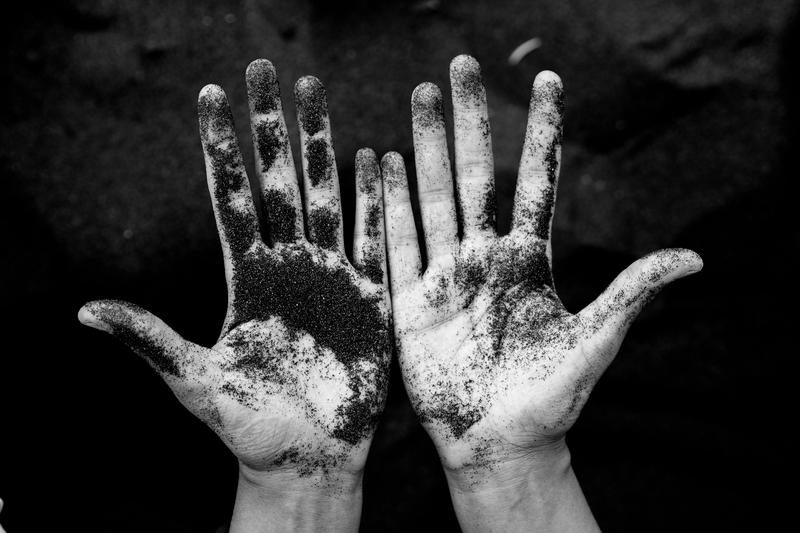
Image by Sabine van Straaten from Unsplash
Alec Witthohn (he/they) is a queer writer from Colorado, whose work is concerned with issues of place, identity, and the environment. They hold an MFA in Fiction from Colorado State University and currently serve as an associate prose edidtor for West Trade Review. Alec’s writing has appeared in Rain Taxi, Colorado Review, and elsewhere.
__________________________________________________________________________________________________________________________________________________________________________

© 2026 Iron Oak Editions




Stay Connected to Our Literary Community. Subscribe to Our Substack Roots & Words






__________________________________________________________________________________________________________________________________________________________________________
