by Karen Sherk Chio
June 23, 2026
A Catalog of Future Mercies by Serena Chopra; Graywolf, 2026; 144 pages; $17.00.
Serena Chopra’s deftly-crafted third poetry collection, A Catalog of Future Mercies, is a breath-taking memoir-in-poems that documents pain’s proximity to family histories, personal identity, and the physicality of violence and pleasure. “One may never know / how fully proximal / they are to pain— // began the story of many lives, our own,” her speaker aptly notes. With Mercies, Chopra lyrically explores the complex inheritance of generational trauma, survivorship, and strength, recursively reframing resilience and mercy across generations, continents, cultures, and personified landscapes. The reader comes to know of the speaker’s suicidal grandmother in India, Dayawati (whose name means “full of mercy”), the speaker’s abusive grandfather (an engineer who tried to burn down the family home), her immigrant father in Colorado, her white maternal family, and the incisive speaker herself: biracial, queer, and navigating paradox and forgiveness.
Mercies opens with a proem in which a psychic senses the speaker’s grandmother: “Dayawati— / come to offer mercy.” Organized into four parts that take turns explaining different aspects of this dramatic prelude, the speaker details three generations of their family’s history over twenty-eight poems, some as brief as a few lines and others as long as nearly twenty pages. Chopra intersperses black and white family photos throughout the text, making a visual impression beyond its figuration and imagery. At times ekphrastic, many poems spread across the page in projective verse, leaving plentiful white space that allows the reader to both read and sense the sprawling landscapes and fragmented memory. The collection’s loose temporal arc focuses on the speaker’s grandmother Dayawati in the first part, the speaker’s father in the second, the speaker herself in the third, and, in part four, interweaves these threads to demonstrate how the speaker cultivates mercy towards family and herself.
“My body is a cave. I echo, echo, echo,” the speaker asserts, exemplifying how Chopra’s collection captures the interwoven physicality of trauma and place. As told to the speaker by her father, her grandmother Dayawati (whose name means “full of mercy”) runs shoeless and pregnant along a dry riverbed in India to get away from an abusive husband (the river itself becoming a recurring motif). Foreshadowing one of many tragedies in the family line, the imminent loss of the child Dayawati is carrying, Chopra demonstrates how landscape and physical body are both places of fluid transformation:
You recall the muskmelon farmers in April, resurrecting
their plots from the receding river. The bank, a cross-section
of drowning. It’s true, some might compare a fetus to fruit,
but in actual imaging, it’s like an ear turning into a lung.
Ready to hang heavy
on its own breath.
Chopra’s poems recount how Dayawati will attempt suicide by throwing herself into the Tapti River from a bridge her engineer husband built. And yet, surviving her attempt at her own life, she will continue to labor as a wife. Chopra deftly reflects this entrapment through the concise and cutting image of her doing laundry in the Tapti: “Dayawati draws water from the bed of her suicides, slaps / clothes brittle against its hot rock banks.”
In Chopra’s collection, striking imagery, incisive metaphor, and intricate floral figuration show the many ways that women endure. In “Invasive Species,” the Colorado prairie flora of the speaker’s childhood (another recurring motif) is personified to show the endurance of the female body. The speaker’s father “pulls at the prairie, tearing her at the roots.” In indelibly vivid and corporeal imagery, Chopra describes how the speaker collects these weeds, how the “prairie roots crowd angry in vases, gripping / their clay fists, claiming the water metallic and mute / as blood.” The speaker asks, “Withered stamen, balding ovaries— / How do her petals withstand fists of storm and wind?” The feminine in Chopra’s work is robust and tenacious; it is within this strength that mercy roots and, later in the collection, rises.
Chopra locates a surprising source of fortitude in the flesh: an eros threaded into all four parts. Three of Mercies’ four parts open with poems entitled “Seduction.” In the first, “Seduction, after The Great Plains,” Chopra’s speaker is explicitly erotic: “I arch sternum and spread leg, know better / than to keep dearly in the empty pockets of pussy commodity.” Eroticism and the empowerment it brings the speaker counters tragedy and abuse. In the third section’s opening poem, “Seduction, after Nocturnal Prey,” the speaker adeptly makes this link: “I know that, leaning here as I am, in the lap of a lap dance, / I withstand a lineage, suffer some sort of guilty comfort.” In the long poem “Grazing on the Nerves of Forgiveness,” as the speaker details how her race and queer sexuality (which is she is told to “hide” by her father) shaped her identity, an erotically-charged self-acceptance interjects agency and resilience into the poem: “The mirror unbuttons her blouse to my skin,” then, “I unzip, I pop the clasp. I pull the straps down”, and finally, “I unbuckle, I loosen the laces. I stretch the tension over my head.”
The collection’s final and titular poem, “Ji: A Catalog of Future Mercies,” is a forward-looking meditation on mercy and forgiveness. Chopra continues to employ a prairie grass motif as the speaker, now caring for her previously abusive grandfather and her father, each in declining health, finds that “mercy holds the hearts… of our many-hearted rhizome.” The psychic from the proem appears again, sensing Dayawati offering her mercy to the men from beyond the grave, as the speaker recognizes that mercy is “our survival, / our love in the subjunctive.” The collection concludes looking toward the future, with mercy enabling hope, wish, and endurance.
Serena Chopra’s A Catalog of Future Mercies is an arresting account of not only family, identity, and landscape, but also forgiveness, strength, and self-acceptance. As Chopra generously observes, though separated by generations, distance, and trauma, family members remain recursively rooted together in a figurative rhizome and share inherent hope: “we are many faces of the same many-faced fruit and, in the pit of each, a prayer, larval and / aglow.” In imagery stunning in its complexity and fluidity, this collection would be a satisfying read for anyone who has navigated the knotted intersection of family history and selfhood while seeking a merciful way forward.
__________________________________________________________________________________________________________________________________________________________________________
__________________________________________________________________________________________________________________________________________________________________________
__________________________________________________________________________________________________________________________________________________________________________
“The land rattles with resilience”: Survivorship, Strength, and Selfhood in Serena Chopra’s A Catalog of Future Mercies
POETRY REVIEW
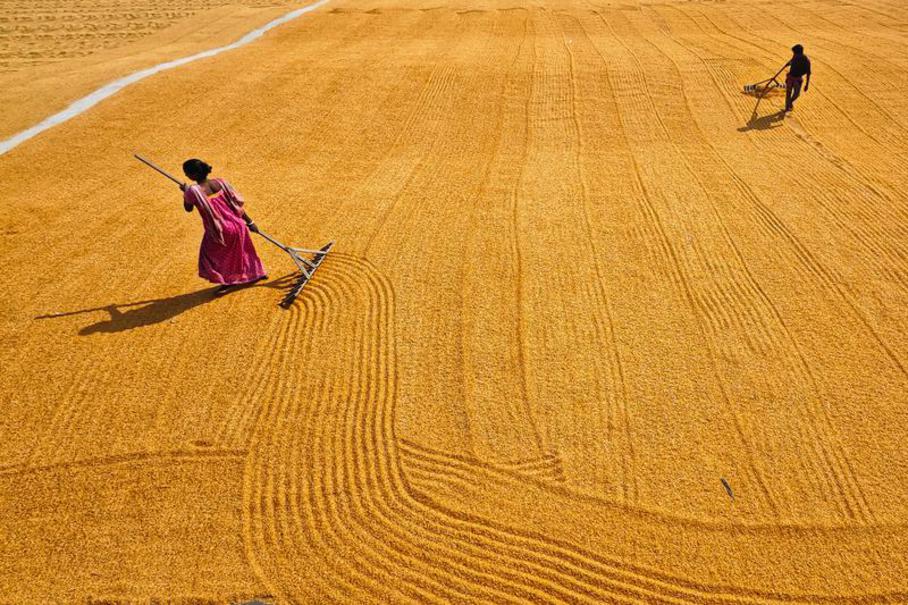
Image by Dibakar Roy from Pexels
Karen Sherk Chio (she/her) earned an MFA in poetry from the University of New Orleans, where she was the winner of the 2025 Andrea Saunders Gereighty/ Academy of American Poets Award, the 2025 Maxine and Joseph Cassin Prize for Poetry Thesis, and the 2023 Vassar Miller Poetry Award. She is an associate poetry editor for West Trade Review, a full-time public health worker, a parent, and a spouse. Her creative work has appeared in swamp pink, Salamander, CALYX Journal, and SmokeLong Quarterly, among others, and her critical work has been published by Colorado Review.
__________________________________________________________________________________________________________________________________________________________________________
© 2025 Iron Oak Editions


__________________________________________________________________________________________________________________________________________________________________________
© 2026 Iron Oak Literary




Stay Connected to Our Literary Community. Subscribe to Our Substack Roots & Words