by Filiz Turhan
October 6, 2026
There's a Monster In the Lake by Laura Fernandez; translated by Alexis Almeida; Graywolf Press; 104 pages; $16.00.
Laura Fernandez’s There’s a Monster in the Lake is a welcome exploration into the modern history of the Loch Ness Monster and what it reveals about our own story-telling habits in an ever-increasing age of technology, surveillance and information. The book’s four short chapters illustrate how the (OFFICIAL HISTORY), as the author presents it typographically, has changed over the decades. Fans of authors such as Susan Orlean (I’m thinking in particular of her wonderful The Library Book) may find this Monster appealing for its quirky multiplying details, and if you are an admirer of Gabriel Garcia Marquez’s Chronicle of a Death Foretold, with its long list of characters and circular structure, you will feel at home in Fernandez’s tongue-in-cheek ruminations of all things Loch Ness Monster.
Fernandez opens with the story of Aldie MacKay’s phone call in 1933 to Alex Campbell, a correspondent for the Inverness Courier, a small local newspaper, and the resulting article that established Loch Ness’s unassailable position as the home of a mysterious monster. Ensuing chapters continually circle back, telling the stories of a seemingly endless cast of Nessie hunters, both the locals already there and the transplants who come to Loch Ness for the express purpose of seeking out the monster. Several stand out, such as Saint Columba (the sixth century Christian who is credited with the first reference) and Constance Whyte (the first serious Nessie Hunter). The book’s array of characters is enlarged by Fernandez’s consistent allusions to additional figures, both real (David Livingstone, Arthur Conan Doyle, Alaister Crowley) and imaginative (Peter Pan, Moby Dick and King Kong). With this enlarged cast of characters, Fernandez crosses both generations and genres to illustrate our human talent for unending creative spin.
Reported sightings of the Monster continued over the years, though needless to say, no actual discovery has ever been made despite search efforts aided by DNA testing, sonar and radar. Fernandez gives necessary credit to the unreasonable hype that alone was enough to spur tourist activity and economic development in the Highlands both before and after World War II. Noting a focus on tourism and its related purchasable swag keeps Fernandez consistent throughout the book, and stretches her research well into our present time where the author’s own voyage across Loch Ness in a “Jacobite Cruise” becomes the inspiration for her inquiry into the (MONSTER). Fernandez, wisely, also notes the capital aspects inherent in any object that receives the glow from our attention economy. Shifting into a study on the marketability of the Nessie story, the author looks at gift shop sales, monster books, and named drinks. Such elements include not just Nessie herself, but also other Highland “commodities” such as the “Cows with Bangs” and the Jacobite Cruise, named for the line of Scottish kings seeking the English throne. I only wonder if the author had considered including Mary, Queen of Scots in her analysis since her tragic story is second to none in terms of the commodification and sale of national heritage for the edification and entertainment of tourists.
Some of the book’s stylistic idiosyncrasies account for its singular charm. Chief among these is the repetitive use of words in all-caps and parentheses. For example, every time the word “monster” appears it is rendered as: (MONSTER). Similarly, lengthy sentences with superfluous clauses highlight the many absurdities at play here, for example: “it’s located on the small, uncrowded Church Street: that is, on the street of the church.” Furthermore, Fernandez favors the use of paragraphs comprised of a long single sentence and single paragraphs that go on for pages. The book’s recursive chapter structure is justified by the author’s observation that “nothing tangible has been found in the (LAKE), and therefore, the story has not moved forward.” This structure gives the reader ample opportunity to enjoy the writer’s canny observations about her subject and admire the ways in which the book’s craft reflects its themes.
What makes all these intricacies and details an engaging reading experience is the author’s unbridled tone of sarcasm. How else to approach such heady issues as the ontological/epistemological split in our human condition, our (limited) ability to perceive reality and our unflagging drive to create alternative realities through our imagination? For, while Nessie may be an imaginative construction, akin to other imaginative constructions such as Proust’s madeleine or Van Gogh’s sunflowers, they have become as “real” as rocks or trees occupying physical space in reality.
The closing pages of the book continue to swirl around the nature of human imagination and the ways in which it can be corralled for market-ready entertainment. Fernandez links the discussion of these creations of human imagination to the means of reproduction: in this case, the articles, books, TV episodes and film documentaries in which we clever humans package our fancies for communication and consumption by others.
Within There’s a Monster in the Lake’s deep dive into history, the author’s reflections on Nessie reach entertaining insights about the positing-power of the human imagination. And while Fernandez does not engage with the question of generative AI technology as it pertains to such creative endeavors, one can infer from this book’s focus on the human “capacity for wonder,” that the author believes that our drive to create remains unassailable. To make her point, the author uses the final sentence of the second chapter to close the book as well, deploying repetition a final time to remind us of the real truth in Nessie’s persistence: “The story, like the battle, and the show, must always go on.”
__________________________________________________________________________________________________________________________________________________________________________
__________________________________________________________________________________________________________________________________________________________________________
__________________________________________________________________________________________________________________________________________________________________________
Here Be Monsters: Laura Fernandez's There's a Monster In the Lake Is For Those Who Want to Believe by Filiz Turhan
NONFICTION REVIEW

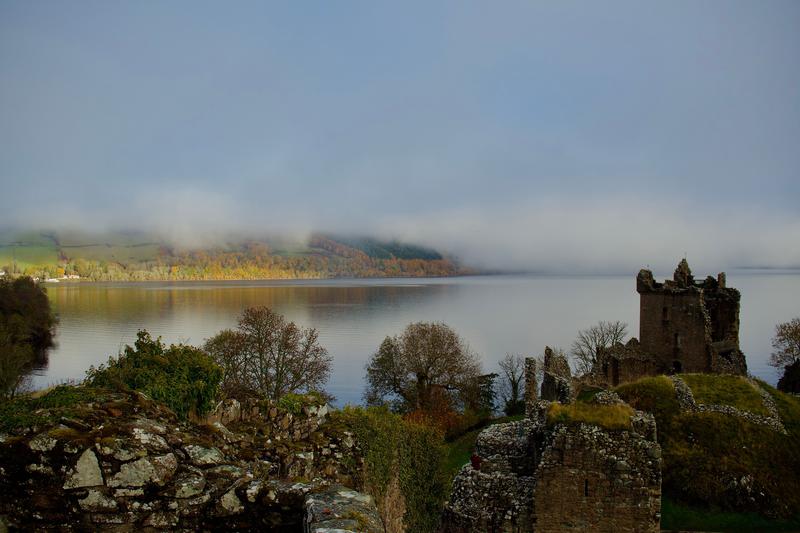
Image by Lucas Carlini from Pexels
Filiz Turhan holds a PhD in English Literature from New York University, and she is a professor of English at SUNY Suffolk. Her creative work has appeared in The Sonora Review, The Threepenny Review, The North American Review, and elsewhere. She also serves as an associate prose editor for West Trade Review.
__________________________________________________________________________________________________________________________________________________________________________
© 2025 Iron Oak Editions
__________________________________________________________________________________________________________________________________________________________________________
© 2026 Iron Oak Editions




Stay Connected to Our Literary Community. Subscribe to Our Substack Roots & Words