
by Devyn Andrews
April 7, 2026
Day Care by Nora Lange; Two-Dollar Radio; 216 pages; $17.95.
Not all writers make their debut with an award-winning and convention-defying book, and even fewer follow up such a distinguishing first accomplishment with an equally impressive second. And, to do it all in under two years?
I can really only be describing Nora Lange, the inimitable up-and-comer behind the critically-acclaimed novel Us Fools (2024). Now bringing us the raucously brilliant short story collection Day Care, Lange once again demonstrates her formal ingenuity and sharp eye for contemporary American life, quickly cementing her place as a compelling new voice in literary fiction.
The eighteen pieces in Day Care are wry, punchy, and often times bizarre. With stories set in locales as delightfully variable as a hotel conference room on Cape Cod, the back of a totaled sedan in Sacramento, and the inside of a literal snow globe, Day Care’s unlinked fragments find thematic unity across Lange’s collection as a whole. Investigating motherhood, desire, purpose, sex, and the ongoing challenge of sense-making, Lange embraces mess and complexity as she probes the contradictions inherent in the systems that define modern life, eschewing strict realism in favor of more associative freedom of movement. And while those who prefer tight coherence in terms of plot development may find some of Lange’s choices in Day Care puzzling, the deceiving accessibility of Lange’s linguistically-dense prose rewards attentive readers with glimpses of the rich, thematic connective tissue underpinning her work.
Fans of Us Fools will find quick footing in Lange’s sure-to-become signature world of women writers, surreal situations, and perfectly-calibrated one-liners. There’s “Hotspot,” a story about an unemployed artist whose commandeering older brother cuts off her internet access: “She was in no position to lose his financial support. Kafka had died in a dark hole, like, a real shithole.” And in “Throwback,” a kind of Ovid-meets-A Christmas Carol crossover, our narrator is visited by the mind-reading apparition of an old friend who moved to Canada: “Why am I here? I ask the spirit. Because, she says, you pitched Jezebel on a ‘Fear and Loathing at the Bridal Expo’ piece.” “Landfills” introduces a teacher who spends the summer in rural Oregon with her partner and young daughter, ruminating on garbage dumps and the concept of scapegoats as she works on a mysterious project in her basement: “There were outlines down there that had to do with humans and the land. There was a drawing of a buffalo with the body of a semitruck—if that doesn’t make sense to you, I would tell the two of them, then don’t expect how anything else might.”
Lange embraces the formal flexibility offered by the short story in these voice-driven and unconventional narratives, which oftentimes incorporate absurdist and surrealist elements. Rather than focusing on heavy character development or constructing elaborate settings, Lange leverages the form of the short story for what it does best— immersing readers in potent worlds that are more evocative than informative, in which one is not just told about these fictive landscapes but allowed to experience them directly. By distilling nebulous concepts into concentrated, evocative, non-linear pieces that move at a whirlwind pace, Lange avoids over-simplifying these expansive narratives into easily digestible plots. Many of Day Care’s stories are under ten pages long, a formal constraint that balances some of Lange’s more unconventional choices, allowing her to keep momentum on the line-level as she prioritizes thematic exploration over logical plot progression.
And while explorations of gender, social expectation, and the nuclear family throughout Day Care put Lange in conversation with many contemporary female writers, the way that her characters resist easy classification or taking on symbolic qualities sets this unique work apart in a saturated field. In particular, the women we meet in Day Care are not necessarily effaced narrators commenting on their own erasure, nor does Lange seem interested in re-employing any hackneyed shorthand of the ‘unlikeable female protagonist.’ Instead, Lange instead affords the women she writes a refreshing narrative and artistic agency, following their leads without passing value judgement—witty, brilliant, and sometimes stubborn, these characters write and travel, make art, have sex, call their mothers, experience loss. Sometimes, these characters desire intimacy; at others, they shirk away from connection. Readers get the sense that Lange’s characters are indifferent to their likeability, existing in their own right rather than as performance. In this way, Lange’s female characters come to life, often surprising us without seeming cartoonish or flat.
At times, these characters can be quite elliptical, refusing to explain themselves for anyone else’s benefit – in lesser hands, this kind of withholding might run the risk of alienating readers and/or muddling thematic waters. But Lange’s dynamic use of language and surefooted prose earns and keeps her audience’s trust, her trademark employment of non-sequitur on the line-level mirroring the absurdist elements woven into these stories. Creating a fruitful ambiguity that propels the collection forward, what is left unsaid holds its own weight. Lange’s work is suggestive of meaning without prescribing it, allowing readers the pleasure of coming to their own conclusions.
One of the most salient examples of Lange’s aptitude for anticipating and subverting expectation, both on the narrative and the line levels, comes from “Fork.” An eight-page gem in the middle of the collection, “Fork” follows an unnamed narrator who decides to fly out to Providence the morning of her ex’s funeral, despite the fact that she hasn’t been invited. Equipped with only a Band-Aid, a Lovecraft novel, and the red-Sharpie outline of a fork that she has drawn on her abdomen, the narrator finds herself arriving to the cemetery too early. Despite her attempts to read quietly in the grass, the narrator is overcome by grief, dissolving into memory not of her former partner, but of a goldfish named Pepper she won in a game of darts at the state fair when she was a child:
“That goldfish had outlived my mother’s expectations. She had said Pepper would last a year. Three, tops. He
lived for forty-two years, just shy of Tish—the oldest goldfish—who held the Guinness Book of World Records for
the longest living goldfish in the world… Kids with darts, fish, books—these things should not be
underestimated.”
Much of the weight of this piece comes from Lange’s startling juxtapositions; while readers are granted very few details about the narrator’s former relationship, we are presented with a deeply-cutting proxy that reveals more about the emotional core of this story than it first seems to. In this passage, Lange’s perfectly placed “he” presumably refers to Pepper the goldfish who “lived for forty-two years,” though a case could certainly be made for a more thematically-rich, ambiguous reading in which this pronoun referent includes both Pepper and our narrator’s deceased ex. Close readers will find this enticing kind of pattern—meaning arrived at through proximity—a propulsive force that runs through and across each of these eighteen stories.
Ultimately, Lange’s formal expertise and risk-adept prose make Day Care a unique and compelling take on the contemporary collection. Instead of using the short story as a space to problem-solve or offer tepid solutions to these modern (and gendered) crises of being, Lange allows her readers to experience the tension she explores directly through language, resisting neatness, sentimentality, and easy answers at practically every turn. In a world of rigid and ever-present cultural expectations for what books by women and about women should be, Lange’s refusal to tailor her work to convention is a remarkable triumph.
__________________________________________________________________________________________________________________________________________________________________________
__________________________________________________________________________________________________________________________________________________________________________
__________________________________________________________________________________________________________________________________________________________________________
'These Things Should Not Be Underestimated': The Bizarre Quotidian in Nora Lange's Day Care
FICTION
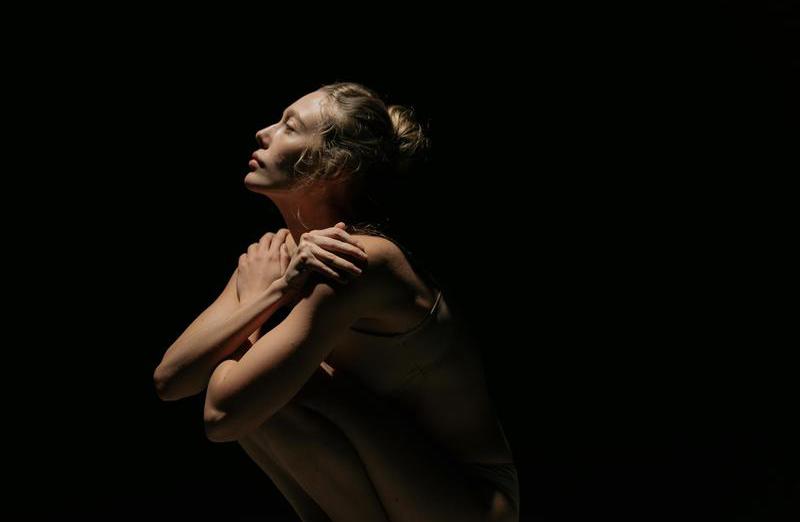
Image by Ron Lach from Pexels

__________________________________________________________________________________________________________________________________________________________________________
Devyn Andrews is a graduate of the University of Illinois Chicago Program for Writers. Her work has been published in Cutthroat, Memezine, and elsewhere. Previously, she lived in Boston and Sacramento.
© 2026 Iron Oak Editions




Stay Connected to Our Literary Community. Subscribe to Our Substack Roots & Words





__________________________________________________________________________________________________________________________________________________________________________
