by Mikal Wix
July 24, 2026
Afterlight by Caleb Nolen; University of Utah Press; 64 pages; $16.95.
Writing about Auschwitz, philosopher Giorgio Agamben named a paradox of testimony: the person most authorized to speak about catastrophe is the one who cannot, because they are dead. The survivor testifies inadequately, always across a crevice no language can bridge. True testimony, by Agamben’s account, happens only when the survivor gives voice to the impossibility of speaking. Caleb Nolen’s debut collection, Afterlight, winner of the Agha Shahid Ali Prize and out from the University of Utah Press, makes this paradox its engine.
Reading the collection across two sittings that I didn’t choose, finishing Afterlight feels less like an attention than like being held under. From its opening surrealist dream of a boy carrying his own severed head to school, the book understands itself to be arguing against its own existence. To witness the deaths of Bobby, Mike, Troy, and Jonathan (the four young men whose lives gather across the collection) is one thing. But to render those deaths into poems is something else, and Nolen never lets the reader forget the distinction.
This tension reaches its hardest expression in “Black Friday,” the book’s emotional pillar. During a holiday, the speaker discovers Bobby has been dead for five months. What follows is almost unbearable in its mundanity: a walk past Bobby’s old house, setting the table, microwaving green beans. Instead of elegizing, the speaker decides to tell no one, not his family, not the new friends, not even the woman who loves him. “I wanted his death to be his,” he says, “not some story folded into my life.” The poem refuses the elegist’s traditional stake and denies the speaker permission to transform the death into something meaningful in his own ongoing story. The poem does what Agamben asks of the witness when it defers to the singularity that belongs only to the one who is gone.
This refusal scaffolds the whole collection. The “Letter to...” poems addressed to Cain, Abel, Job, Judas, the Woman Taken in Adultery are not persona poems, as Nolen notes. The distinction is critical because a persona poem colonizes another’s perspective, whereas these letters speak to the other, protecting an unknowable solitude. “Letter to Abel” ends with the speaker’s mouth opening and closing, “silent and stupid as a fish” in the face of an impossible question. The poem honors the impossibility by not answering.
But the book’s most formally radical move is its appendix, a sequence of prose portraits called “Hagiographies” that refuses to be poetry. Here Troy, Jonathan, Bobby, and Mike are returned to their particularities in the most direct language the book offers: plain declarative sentences, anecdotes, and evidence. “He had a small scar on his right hand, in the webbing between his index finger and thumb,” the speaker says of Bobby. “He was my best friend, but I wasn’t his.” The hagiographies refuse to give these lives significance through lyricism. They simply account: Bobby’s green trench coat, Mike defending the speaker against a kid who called him a freak. By declining to decorate, something stranger than a lyric appears: the declaration that these were actual people, irreducible to symbol. Reading the entry for Bobby, I caught myself doing the thing the book refuses: reaching past the small scar for what it should mean, and the plainness of the language stopped my hand.
“Letter to Judas” is the book’s own conscience about all this. The speaker imagines the humiliation of making a living from reporting the specifics of the people he’s lost: “Already a man / stands behind me clearing his throat ... No matter / how few coins I get, won’t they be / heavy in my pocket?” Nolen doesn’t resolve the indictment. He sits with the degradation, letting the allegation ride beside the poem instead of refuting it.
What ties this ethics of witness to the book’s formal project is the apophatic tradition. Jennifer Chang’s foreword reads Nolen’s spareness (the refusal of description, the empty rooms) as a way of clearing space for the dead, and I’d push the reading even further. To find her own self-emptying, Simone Weil approached the divine through what she called de-creation. She understood de-creation as a form of love: you empty yourself so the other can exist more fully where your self had been. Afterlight’s plain diction and unfurnished stanzas operate on this principle, but directed at the human rather than the divine. They are not aesthetic minimalism but the ethical minimalism of the elegist emptying himself so the dead can stand where beautified language would have been. Beauty, Nolen understands, is a debt rather than a right, which is why the book’s most extravagant image appears not in elegy but in “Waking Dream,” about the speaker’s unsteady conviction that he is about to “do something so beautiful” that it will explain why he has been allowed to live. The ornament is earned because it is withheld everywhere else.
Afterlight arrives in a literary moment busy with collections about grief and the politics of whose deaths get mourned. What distinguishes Nolen’s book is that it makes its argument by systematically refusing the moves those collections rely on. He doesn’t aestheticize the dead into symbol. He doesn’t offer the catharsis of a speaker who, by the final lines, has understood something that justifies the suffering. He keeps the gap open and the debt clear.
There is a stone in this book, carried for years, even held in sleep, the emblem of the one moment he believed God had answered him: “As Troy died and Bobby died and Mike died / and I stayed alive, carrying around a stone.” Not resolution, but testimony, and in the exact sense Agamben meant: the account of the one who remains, knowing that remaining is not the same as surviving, and who keeps speaking into the emptiness left by names anyway. And by the last page, I am one more person who remains, holding names I was given and did not earn.
__________________________________________________________________________________________________________________________________________________________________________
__________________________________________________________________________________________________________________________________________________________________________
__________________________________________________________________________________________________________________________________________________________________________
Against the Elegist: The Ethics of Witness in Caleb Nolen’s Afterlight
POETRY REVIEW
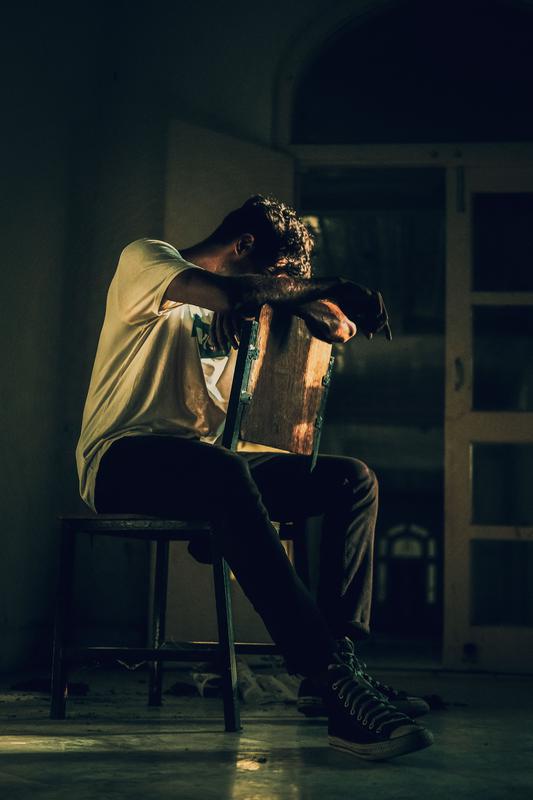
Image by Karthik U from Pexels
Mikal Wix lives in the American South, which seeds insight into many outlooks, including revenant visions from the closet. Their work can be found or is forthcoming in Corvus Review, Olit, Berkeley Poetry Review, Tahoma Literary Review, Roi Fainéant Press, decomp journal, and elsewhere, and works as a science editor by day.
__________________________________________________________________________________________________________________________________________________________________________

__________________________________________________________________________________________________________________________________________________________________________

© 2026 Iron Oak Literary




Stay Connected to Our Literary Community. Subscribe to Our Substack Roots & Words