by Claire Jussel
March 4, 2026
blush / river / fox by Anna Nygren; Milkweed Editions; 162 pages; $18.00.
Anna Nygren’s English-language debut, blush / river / fox, bewilders and blurs the boundaries between familiar and unfamiliar language, the human and animal, and the body and the world. While themes of otherness, becoming, translation, language, and sensory experience are stitched across the book, Nygren’s raw, inquisitive, body of poetry strains against categorization and embraces a wild multiplicity of sense-making, images, and shapes.
The text is formed from three chambers. blush, the first and most spacious on the page, is marked with sharp inclusions of teeth and flesh, shards of recollection from youth, and illustrations from Nygren. blush establishes the presence of the wild body and Nygren’s spare, evocative syntax. This section is also populated by Nygren’s loose-lined drawings of amoeba shapes, creaturely bodies, and quizzical, side-eyed portraiture. RIVER, a section of prose poetry, anchors the book in a twisting flow of an origin story. While the pages here are more densely filled, Nygren’s poetics continue to loop, fold, and surprise. The origin of the speaker, their awareness of language, and the multiplicity of ways to behave in and make sense of the world are stitched to the branching paths of translation and possibilities of language. FOX. merges the form of the previous two sections with a medley of spacious pages and blots of denser text. Bites of language from the previous two sections are found repeated and rephrased among the poem. The folkloric, glistening third section reiterates wildness in the form of Fox, an elusive and shape shifting entity.
Across these three parts, Nygren’s succinct syntax and associative currents weave in between the familiar and unexpected at the acceleration of thought. Their language is spare, but not austere. Even the most fragmented sections are positioned with intriguing text design or neighbored by Nygren’s illustrations to invite interpretation and possibility. Even a lone word on a page operates as part of a linguistic connect-the-dots rather than collected scrap language. This sense of linguistic connection is furthered by Nygren’s frequent invocation of folding, layering, or enveloping:
an opening in to the head
the brain tumours
the outside of the inside
in to the inside
in to the within
a fold of head
a week of
relapse
falling forward over
rose leaf like the skin
bear like
give like
vitreous eye
This motif is echoed in the shape of the text. Words such as “skin,” “pink,” and “eyes,” loop and recur through the text. Distinct passages such as the apt “bits of my body end up in the Sibling’s” reappear in other sections. These recurrences support the connection of the larger poetic body, and also invoke a nesting-doll quality in the language in which every word holds the potential for stacked meanings and permutations.
In keeping with this sense of enfolding, the experience of reading blush / river / fox is perhaps best described as being enveloped in a chrysalis. Nygren breaks down the body and language, and delves the reader into a sensory and linguistic state unaffixed to convention and primed for transformation. From the opening lines “powder on pink wounds // skin in lips / lips in skin / mouth in hair” to the closing “drops of fox in the Flesh,” the corporeal is sliced open, compressed, and altered. In a similar manner, Nygren truncates words and phrases, and reconfigures images in unexpected groupings that can create both befuddlement and awareness. The associative possibilities in Nygren’s poetics come into full force when they play between English and Swedish as words in each language unfold towards the other in multiple resonances:
Mother says about Cat: RIVER. River is a rod fed to my mouth now. In River there is me. The words are River. Claws scratching
turns into River. Scars from scratching are River in River words tell me. Cats in River. Claws belong to cats and crows. Claws are
longing for River. Later I learn. River translates. River with Mother’s tongue is the act of claws scratching of clawing in skin in
tree in thing. It translates. It transforms later. River is water is running crack in earth. River is scratching. River is running.
Claws make River. River makes blush in crack round crack in face. River laughs.
The language chrysalis of Nygren’s blush / river / fox is emphasized in the third chamber of the text. The malleable variety of images in blush and adaptable attention to language of RIVER are carried forward by the slippery yet determined presence of FOX, which transforms page to page: “the Fox is a Peach and an Apple // the Fox is an ice Cream // the Fox is a barbie Pony; a ghost Detective; a Trace of a palace; a Paper; a Word…”
Nygren exalts the possibilities, multiplicities, and wildness of the language and the body. Rough and tender at the edges, versatile and keen at heart, blush / river / fox contains a word-world that is utterly unique and captivating.
__________________________________________________________________________________________________________________________________________________________________________
__________________________________________________________________________________________________________________________________________________________________________
__________________________________________________________________________________________________________________________________________________________________________
“River means with Mother’s tongue tear”: Transformation and Possibility in Anna Nygren’s blush / river / fox
POETRY REVIEW
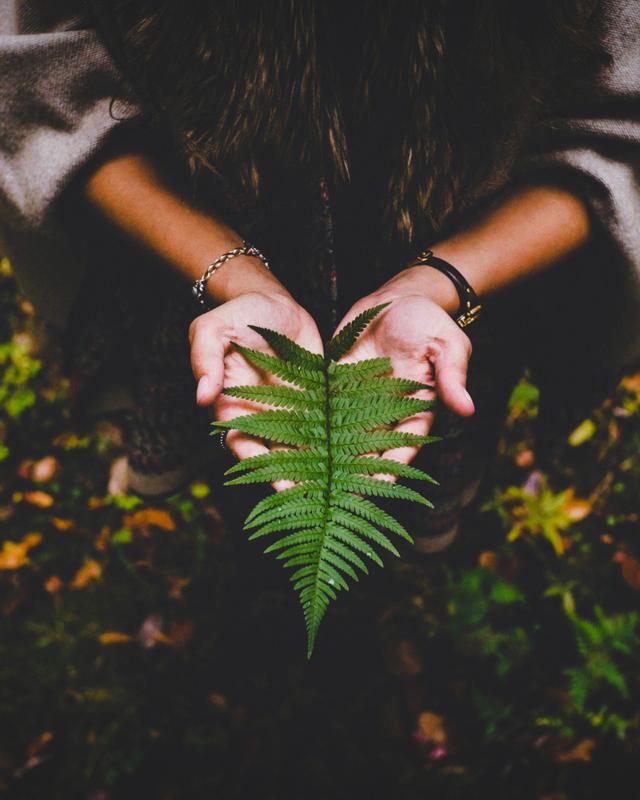
Image by Lucas Allman from Pexels
Claire Jussel is a poet, writer, and artist from Boise, Idaho. Her work has appeared in or is forthcoming in West Trade Review, Wizards in Space, Split Rock Review, Black Fox Literary Magazine, and SEISMA Magazine. She currently resides in Ames, Iowa where she is pursuing her MFA in Creative Writing & Environment at Iowa State University.
__________________________________________________________________________________________________________________________________________________________________________
© 2025 Iron Oak Editions
__________________________________________________________________________________________________________________________________________________________________________
© 2026 Iron Oak Editions



Stay Connected to Our Literary Community. Subscribe to Our Substack Roots & Words