
by Isaac Randel
May 7, 2026
Partly Strong Partly Broken by Nathaniel Popkin; New Door Books; 249 pages; $19.95
The Talmud tells the story of a gentile who, wishing to convert to Judaism, challenges the scholar Hillel to teach him the entirety of Torah while standing on one foot—an impossible task for even the most erudite and athletic of sages. But Hillel accepts and, propping himself on one foot, responds: “What is hateful to you, do not do to your neighbor. That is the whole Torah; the rest is commentary.” Ever since that conversation, whole libraries have been filled with attempts to mirror Hillel’s gift of terseness and whittle Jewishness to a single quip or phrase. What is quintessential about Jewishness? Acute sensitivity to historical suffering? Rhetorics of liberation? Resistance to totalizing narratives? Comfort with contradiction? And, perhaps most pressingly in the post-1948 world—is Jewishness tied existentially to the Israeli body politic?
Partly Strong, Partly Broken, Nathaniel Popkin’s latest novel, offers a halting but deeply resonant response to these questions and the heartbreaking personal fissures which they accompany. Humane, sensitive to dissent, and alert to the minutiae of petty politicking, Popkin spotlights a community rent by these issues of identity and ownership. Rather than resolve them, Popkin allows them to fester until they become unbearable for his characters—and only then, at the story’s nadir, does geopolitics enter the stage to shatter what little is left of their hopes for stasis. The result is an affecting and weighty—if sometimes narratively uneven—slice-of-life chronicle which opens presciently onto a more terrifying global stage.
The novel centers on a New Jersey synagogue, Temple Beth Israel, and its surrounding communities in the High Holy Days leading up to the calamitous October 7 attacks in Israel and the razing of Gaza in the ensuing war. Ever alert to subcultural quirks and particularities, Popkin masterfully captures the spirit of this specific nexus of Jewish American life: suburban, affluent, politically progressive, halachically heterodox but zealous for its ancient traditions. Its leader (and the novel’s protagonist), Rabbi Adinah Feld, does not believe in God, per se, but in the presence of “a vast energy” that works nebulously toward the secular aims of social justice and unity. She cherishes her Jewish heritage, and, through her planned construction of a Hebrew Learning Center, hopes to kindle this passion for future generations. She, and a plurality of her congregants, feel detached from Netanyahu’s Israel and the messianic extremes of Zionism. Against this standard paradigm, Adinah’s Judaism allows for expressions of solidarity which her more conservative congregants find suspicious. She maintains a fraying romantic relationship with an Israeli Arab woman. She serves on a Multifaith Coalition, where she forms a deep friendship with a Palestinian American imam and becomes a mentor to Fami, a Syrian refugee who becomes enmeshed in the liturgical life of Temple Beth Israel. When Fami is hospitalized from a brutal attack by a notorious local provocateur, Adinah organizes a multifaith prayer vigil, drawing grumblings from some of her own congregants.
Adinah, as a spiritual seeker, is convincingly rendered—she is curious, sensitive, able to read and anticipate reactions from her often cagey coworkers and congregants. But her strengths as a leader are assumed rather than proved by the novel’s own conflicts. She is aloof from many of the fiercest conflicts within the synagogue, and at times when shouting matches need breaking up, or contractors need firing, the real “muscle” for resolving conflicts is found elsewhere—usually through more obscure secondary characters. For all the attention paid to her complex spiritual discipline, Adinah’s leadership remains unaccountably wispy through much of the narrative.
Adinah’s challengers at the synagogue span the political divide: the conservative pro-Israel faction, outraged and revolted by her “over-zealous” collaborations with a Palestinian cleric, is the most hostile; but Adinah also faces a rearguard attack from her congregation’s progressive side, who veto her long-awaited Hebrew Learning Center by lambasting it as a “Zionist” front. Popkin’s treatment of these challengers represents the novel’s greatest triumph. Popkin imbues this extensive cast of agitators with a refreshing sense of realpolitik; they dodge cloying culture-war rhetoric, they know how to game the synagogue’s board with smooth suggestion; they know how to come out of a bitter altercation looking civil; and, most effectively, they know when to hold their tongues. Trudy, a newcomer to the synagogue and a deeply ideological Zionist, spooks Adinah more for her measured silence during dense debates than for any actual threat. The anticipation of a fight, for Adinah and for readers, becomes as painful as the fights themselves. Building a sense of menace and foreboding throughout, Popkin captures the crackle and fizz of a community almost—but not yet—ready to collapse on itself.
In framing the story of Temple Beth Israel around a known catastrophe, Popkin consciously works against the novel’s sense of closure. Each chapter opens with a precise date and time, signalling for the events’ distance from Hamas’s imminent attacks on Southern Israel’s kibbutzim. The closer that Adinah gets to reconciling the disparate factions in her community, the closer, also, comes the moment that will be sure to undo all her progress. All the negotiations and redefinitions of Jewish life within the walls of Temple Beth Israel before October 7 are about to become transfigured beyond recognition by the mass slaughters on the horizon—all of which happen off the page. None of the characters—including Adinah—has an inner sureness firm enough to weather the bloodshed and soul-searching of the coming war entirely intact. By telescoping the ending so prominently throughout the novel, Popkin undergirds the story with dread, but he also contributes to an ever-present sense of missed opportunity. The world of Partly Strong, Partly Broken is made intentionally peripheral by the assurance of a far grander and more consequential story just over the horizon. Finishing the novel feels like watching the finishing touches being put on a sandcastle about to be pulverized by the incoming surf.
The apparent hopelessness that permeates the novel’s final pages, then, is a victory for Popkin’s realism even as it represents a failure of the otherwise expansive moral vision offered by Rabbi Adinah herself. And this dissonance, anticipated subtly by Popkin from the novel’s earliest chapters, turns the novel from a community drama into weirder and richer territory. Partly Strong, Partly Broken offers potent and interesting answers to the questions of Jewishness but casts doubt on whether those answers can survive the brutalities of the post-2023 paradigm. Like Adinah herself, the novel offers a counterintuitive sort of spiritual counsel—the possibility of holding multiple contradictory truth claims at once—while hoping, perhaps against all hope, that there may still people patient enough to hear it.
__________________________________________________________________________________________________________________________________________________________________________
__________________________________________________________________________________________________________________________________________________________________________
__________________________________________________________________________________________________________________________________________________________________________
“Speedily and (Out of) Time”: Jewish Identity at the Crossroads in Nathaniel Popkin’s Partly Strong, Partly Broken
FICTION REVIEW
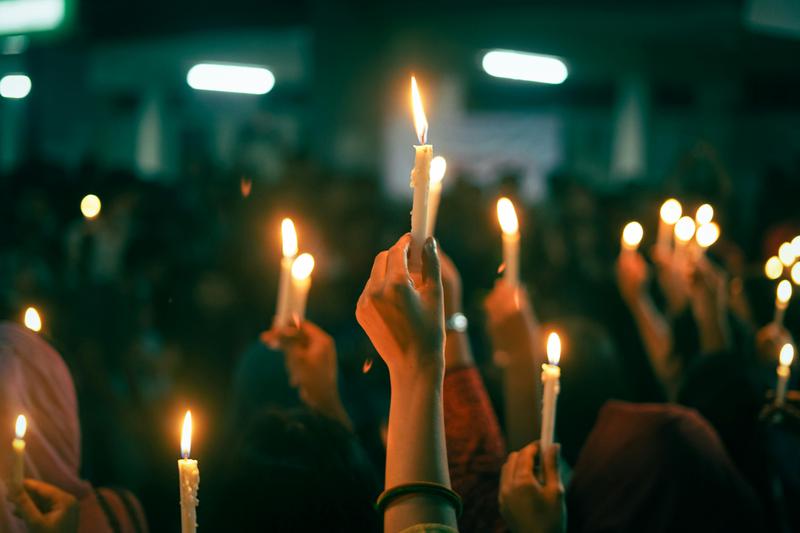
Image by Nahmad Hassan from Pexels
Isaac Randel earned an M.F.A. in Creative Writing from The New School. He is an adjunct instructor of English at Mercy University and teaches English at Iona Preparatory School in New Rochelle, New York. He currently serves as an Associate Poetry Editor at West Trade Review.
__________________________________________________________________________________________________________________________________________________________________________

© 2026 Iron Oak Editions




Stay Connected to Our Literary Community. Subscribe to Our Substack Roots & Words






__________________________________________________________________________________________________________________________________________________________________________
