
by Isaac Randel
September 1, 2026
Black Lake by Emily Skaja; Graywolf Press; 102 pages; $17.00.
Grief – the oldest and freshest offering of the Muses – abounds in Emily Skaja’s Black Lake, though it’s channeled through a discordant chorus of voices. Among them, a disarmingly chatty, semi-ironic voice arrives at heartbreak through the lateral motions of black humor. Another dark, parable-laden voice points to distressing omens in innocuous daily occurrences. Interspersed within these is an impressionistic, nightmarish third voice that supplies the collection with haunting recurring dreamscapes of the titular underworld lake and its bleakly symbolic environs. Black Lake, Skaja’s second collection, is the resulting chronicle of these dizzying, polyphonic voices traveling through an especially dark territory: the aftermath of multiple pregnancy losses.
Skaja’s 2018 debut Brute (winner of the Walt Whitman Award) was a masterclass of quiet tonal balance, establishing Skaja’s bona fides in transfiguring gendered violence into an embodied poetics shot through with humor. Though it treads some of the same thematic ground, Black Lake is a more adventurous offering stylistically, marking a small metamorphosis in Skaja’s poetics. Poems in Black Lake are more comfortable with forays into outright absurdism and suspensions of disbelief. While the gut-wrenching specter of miscarriage remains palpable throughout, humor in all its guises – as self-deprecation, as political satire, as thematic lubricant, and as counterpoint to grief – takes on much of the collection’s heavy lifting. This greater tonal variation gives the collection a refreshing capaciousness in its treatment of tragedy and makes that tragedy, if not more bearable, then at least easier to inhabit emotionally.
The speakers in Black Lake are haunted by the past. Their poems, though, are too dynamic and too frenetic to remain backward-looking. Their lyrical attentions are also too immediate to look, except faintly, toward future reconciliations. The energy of the poems remains locked in a torturous present shot through with the faintest glimpses of far-off resolutions, often ironically subverted or cast aside as platitudinous nothings (as with the well-meaning consolations from strangers and the speakers themselves – “this isn’t over” and “Wherever she is now / at least she’s free of pain” – that pepper the collection).
Midway through the collection, the speaker visits her grandmother in the dementia ward who believes she’s lived through the plot of The Sound of Music, while leaving out “the Nazis” from her falsified life story (“What Nazis?”). This metaleptic leap the speaker experiences in her grandmother’s private mythmaking carries across to figures from other poems: Black Lake is saturated with characters wrestling with their place in their own tragedies. At times the speaker’s proximity to loss is suffocating; at others, speakers evince an even greater discomfort from a sense of cosmic loneliness.
Motherhood’s larger tragic dimensions are explored from several original angles in the collection. The speakers’ tenderness toward their lost pregnancies is displaced – humorously at times, obliquely at others – onto other objects of possible affection: plants rescued from nurseries, a loaf of bread “that (in low light) almost looks like a baby,” and in multiple cases, the conscious creation of a psychological “other self.” The startling arrival of these stand-ins creates a sense of pathos strong enough to defuse even the poems’ otherwise ironic framing. In “Black Widow,” the speaker declares, “I meant to have a baby / but instead I grew a second self / a monstrous self”; at the collection’s close, this “Self” becomes fully dramatized in a tragicomic episode where the secondary Self is abandoned in a motel. The conceit brings out the best in Skaja’s narrative skill and here, as elsewhere, injects a novelistic sense of conflict into the more lyrical tenor of the poems.
This rhetorical turn – the humorous transformation of abstractions like “Death” or “Self” into flesh-and-blood characters or as mundane tangible objects in a landscape – appears in various forms all across the collection, and eventually reads as an overreliance. The collection is at its strongest when, after exhausting the possibilities of these anthropomorphic turns, it settles for the clarity of a sequence of unironic images. In “Black Lake” (one of many poems bearing the title), the speaker declares: “Nothing is like this. It just is.” The same forthrightness appears in other “Black Lake” poems, including the early piece “The Door,” where the dread-filled landscape occupies the poem’s dramatic center:
A galaxy dwindling to blood.
One little life to be grieved. The shock of the fall to an underworld lake.
I was there after, floating in the mold-green ladle of a boat. Watching a lake
of birds fly low into cold winter sun. I looked & looked where you’d gone.
Finding only ice-creaking skeletons of trees, a hiss of blood
under ropes of snow. Then the ringing silence. Thinking, Give me back
the little story of it. That shadow, joy. Wishing I knew what all that red
had taken from me.
The collection returns again and again to these chthonic landscapes, sometimes far more abstractly, and sometimes, as here, with an explicit portrait of the losses that spawned them. These “Black Lake” poems offer an imagistic counterpoint to the otherwise fruitful ironies elsewhere in the collection, and they serve as some of the few places in the collection where Skaja is able to render, visually, the full interior weight of unalloyed grief. The titular Black Lake often slips into a private economy of images which becomes too esoteric to decipher, but the intensity of its gruesome lushness makes up for these conceptual barriers.
At times the collection seems to call out for a more distant perspective to harmonize its latent antipathies and aporia; but the poems themselves are compositions from the battlefield of grief. Very little is left resolved by the collection’s end, and in a particularly self-conscious turn, Black Lake itself acknowledges that this lack of resolution is an outgrowth of the speaker’s own emotional tribulations:
My worst quality is my willingness
to walk into the fetid damp & breathe in death
rather than face an ordinary life
of ordinary disappointments.
Any resolution to the unspeakable griefs explored in the collection, Black Lake seems to argue, will involve a re-engagement with the banalities of “ordinary life,” and a conscious, if torturous, withdrawal from the phantasmagoric landscapes that grief encourages us to create. In Black Lake, Skaja expertly charts the way there, through a series of tender, honest, and at times excruciating encounters with the embodied reality of loss itself.
__________________________________________________________________________________________________________________________________________________________________________
__________________________________________________________________________________________________________________________________________________________________________
__________________________________________________________________________________________________________________________________________________________________________
Engaging the Phantasmagorias of Grief in Emily Skaja’s Black Lake
POETRY REVIEW
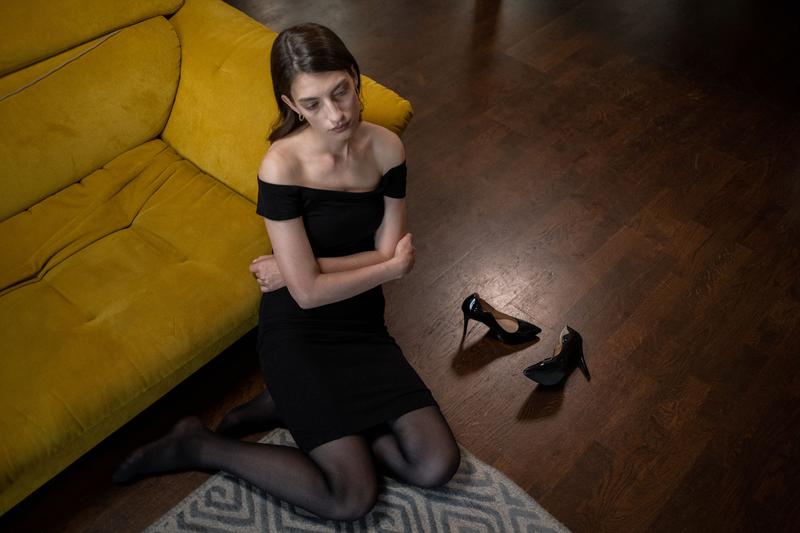
Image by Nahmad Hassan from Pexels
Isaac Randel earned an M.F.A. in Creative Writing from The New School. He is an adjunct instructor of English at Mercy University and teaches English at Iona Preparatory School in New Rochelle, New York. He currently serves as an Associate Poetry Editor at West Trade Review.
__________________________________________________________________________________________________________________________________________________________________________

© 2026 Iron Oak Editions




Stay Connected to Our Literary Community. Subscribe to Our Substack Roots & Words






__________________________________________________________________________________________________________________________________________________________________________
